By Bryan Mark | Last updated: October 21, 2026
The Toyota Venza is a two-row midsize crossover that has been sold in two separate runs. The first generation was sold from 2009 to 2015. The second generation came back for 2021 as a hybrid-only SUV and was discontinued after the 2024 model year.
Because there are numerous model years to choose from, understanding what Toyota Venza years to avoid is crucial if you desire a Toyota Venza. Some of them travel more easily than others.
We checked recall records, owner reliability surveys, and repair cost data for every year. Therefore, you can skip the problematic models and focus on the good ones.
Quick Answer: Which Toyota Venza Years To Avoid?

Per our research, the Toyota Venza years to avoid are 2009, 2010, and 2021. The best years for Toyota Venza are 2014, 2015, 2022, 2023, and 2024. The 2011, 2012, and 2013 models sit in the middle.
| Generation | Best Years | Neutral Years | Years To Avoid |
| 1st generation (2009-2015) | 2014, 2015 | 2011, 2012, 2013 | 2009, 2010 |
| 2nd generation (2021-2024) | 2022, 2023, 2024 | N/A | 2021 |
A neutral year is not a bad car. It only means you should check the recall history carefully before you pay.
In this guide
How We Rated Each Toyota Venza Year
We did not pick these years from opinions only. Each year was checked against three kinds of data.
First, the NHTSA recall records, including the official recall reports.
Second, Consumer Reports, which shows how many NHTSA recalls apply to each model year and how owners rate reliability. Third, RepairPal, which tracks ownership and repair costs.
Owner complaints filed with NHTSA were also read for the years that stood out.
One thing to remember is that recall counts include campaigns shared by several years or even several Toyota models.
For example, the driver-door wiring recall covers every first-generation Venza. Therefore, what separates one year from another is the other recalls and the complaints.
| Model Year | NHTSA Recalls | Consumer Reports Note | Main Issues | Our Verdict |
| 2009 | 8 | Less reliable than other cars of the same year | Floor mat and accelerator pedal recall, stop lamp switch, driver-door wiring | Avoid |
| 2010 | 9 | About average for its year | Same recalls as 2009, highest recall count of any year | Avoid |
| 2011 | 6 | More reliable than other cars of the same year | Stop lamp switch, recall on early 2011 builds, driver-door wiring | Neutral |
| 2012 | 4 | About average for its year | A/C condenser drain hose, driver-door wiring | Neutral |
| 2013 | 4 | No verdict listed | A/C condenser drain hose, driver-door wiring | Neutral |
| 2014 | 1 | No verdict listed | Only the driver-door wiring recall | Best |
| 2015 | 1 | No verdict listed | Only the driver-door wiring recall | Best |
| 2021 | 2 | No verdict listed | Windshield cracking complaints, stability control recall | Avoid |
| 2022 | 1 | Predicted more reliable than the average new car* | Stability control recall | Best |
| 2023 | 2 | Predicted more reliable than the average new car* | Two recalls, confirm each one on NHTSA | Best |
| 2024 | 2 | Predicted more reliable than the average new car* | Two recalls, one for dealer-installed accessories | Best |
*Consumer Reports bases this prediction on the 2022, 2023, and 2024 models together.
The data was checked in October 2026. Recalls can be added at any time, so always run the VIN of the exact car on the NHTSA recall page before buying.
What Toyota Venza Years To Avoid?
The Toyota Venza has gained traction among drivers. Nevertheless, some Toyota Venza years are inferior to others. These might need expensive repairs, which would take time away from your other tasks.
For the finest driving experience, be aware of the problematic models to avoid.
2009 Toyota Venza
The 2009 Toyota Venza problems are the biggest reason this year is on the avoid list. Consumer Reports counts eight NHTSA recalls for this model year, and it says owners rate the 2009 as less reliable than other cars from the same year.
Several of those recalls are about safety. In 2010, Toyota expanded its 3.8 million vehicle floor mat recall to include the 2009 and 2010 Venza. That recall is about the driver’s floor mat getting in the way of the accelerator pedal.
Additionally, the 2009 Venza is part of the stop lamp switch recall (NHTSA 12V-091). Silicone grease can get on the contact surface of the switch during assembly.
When that happens, warning lights may come on, the engine may not start, the shift lever may not move out of Park, or the brake lights may stop working. Toyota said about 116,000 Venza vehicles were covered.
Owners also reported drivetrain whining and grinding noises, along with sudden acceleration, in their NHTSA complaints for the 2009 model. Some of the drivetrain noise reports were around 70,000 miles.
If you still want a 2009 Venza, remember to confirm that every recall shows as completed for that exact VIN.
Official records for the 2009 Venza: NHTSA complaints and recalls | Consumer Reports reliability (2009 models)
2010 Toyota Venza
The 2010 model has the highest recall count of any Venza year. Consumer Reports lists nine NHTSA recalls, although owners rate its reliability as about average for the model year.
It shares the floor mat recall, the stop lamp switch recall, and the driver-door wiring recall with the 2009 model. That is a lot of paperwork for one vehicle.
Nevertheless, a 2010 Venza that has every recall completed and a full service history is not a lost cause. It simply carries more risk, and more things to verify, than the later years. If you are choosing between a 2010 and a 2014 for a similar price, the 2014 is the safer option.
Official records for the 2010 Venza: NHTSA complaints and recalls (2010 models) | Consumer Reports reliability (2010 models)
2021 Toyota Venza
The second-generation Venza came back for 2021, and the first year had the most trouble of this generation.
The most common complaint is windshield cracking. A consumer law firm that reviewed NHTSA complaints found windshield cracking to be the biggest group of complaints on the 2021 model, and several law firms say they are investigating possible class action claims.
CarComplaints lists about $2,000 as the average cost to fix it, at around 12,000 miles.
In addition to this issue, the 2021 Venza is part of a stability control recall (NHTSA 22V-239). The skid control software may not turn Vehicle Stability Control back on when the vehicle is restarted after the driver has switched it off. Dealers update the software free of charge.
The 2021 Venza still has the hybrid system and safety features of the later years. However, those early issues make it the most uncertain pick of the second generation.
Official records for the 2021 Venza: NHTSA complaints and recalls (2021 model) | Consumer Reports reliability (2021 model)
What Toyota Venza Years Are Worth Buying?
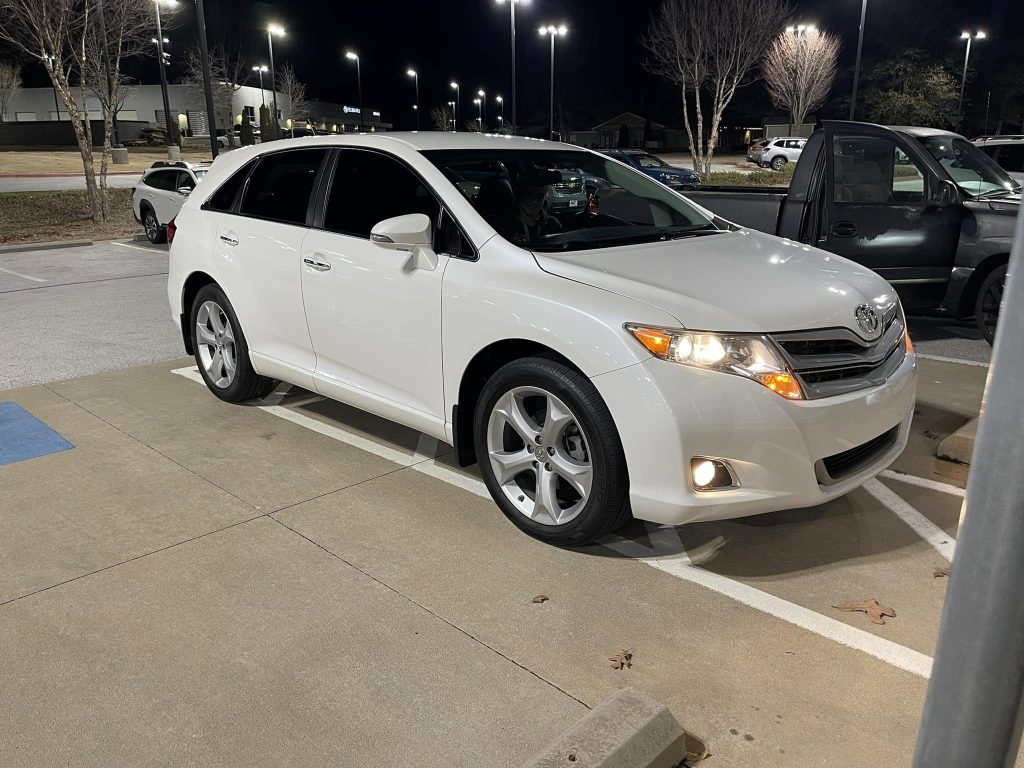
Down below is the list of the best years for Toyota Venza to buy for you:
2014 Toyota Venza
The 2014 Toyota Venza has only one NHTSA recall on Consumer Reports’ record, which is the driver-door wiring recall that every first-generation Venza shares. The floor mat and stop lamp switch recalls do not apply to this year.
You can choose between a 2.7-liter four-cylinder engine with 182 horsepower and a 3.5-liter V6 with 268 horsepower. Both use a 6-speed automatic, and front-wheel drive or all-wheel drive is available. Many drivers prefer the V6 for its smooth acceleration.
As a result, the 2014 is one of the easiest first-generation years to recommend.
Official records for the 2014 Venza: NHTSA complaints and recalls (2014 model) | Consumer Reports reliability (2014 model)
2015 Toyota Venza
The 2015 Toyota Venza was the final year of the first generation, and it also has only one recall on record. That is the same driver-door wiring campaign.
Our earlier version of this article listed 2015 as a year to avoid. After rechecking NHTSA and Consumer Reports, we could not find a recall pattern specific to this year, so we moved it to the best list.
The engines and trim levels (LE, XLE, and Limited) are the same as the 2014. So the main difference between the two is the price and the condition of the specific car.
Official records for the 2015 Venza: NHTSA complaints and recalls (2015 model) | Consumer Reports reliability (2015 model)
2022 Toyota Venza
The 2022 Toyota Venza is the first second-generation year we recommend. Consumer Reports shows one recall, the stability control software update that also applies to the 2021 model.
The Venza is hybrid-only now. A 2.5-liter four-cylinder engine works with three electric motors for a combined 219 horsepower. It uses an electronically controlled continuously variable transmission, and all-wheel drive is standard. For more about this type of transmission, read our post about Toyota CVT reliability.
If you are curious about hybrid battery life, our post on the 2009 Toyota Camry hybrid battery is a good starting point.
Official records for the 2022 Venza: NHTSA complaints and recalls (2022 model) | Consumer Reports reliability (2022 model)
2023 Toyota Venza
The 2023 model added the Nightshade Edition, more standard safety content, and Toyota’s newer multimedia system. Consumer Reports lists two recalls for this year, so check the VIN for both.
Toyota Safety Sense comes with the car. If the pre-collision warning ever shows a fault, our guide on the Toyota pre-collision system malfunction reset can help.
Official records for the 2023 Venza: NHTSA complaints and recalls (2023 model) | Consumer Reports reliability (2023 model)
2024 Toyota Venza
The 2024 model was the last Venza sold in the United States, and Toyota left it unchanged from 2023. It started at about $36,315 and went up to around $44,460 for the Limited. The EPA rated it at 39 mpg combined.
Consumer Reports expects the Venza to be more reliable than the average new car, based on data from the 2022, 2023, and 2024 models. Because production has ended, the 2024 is also the newest Venza you can buy.
One thing to know is that the second-generation Venza never got a towing rating, so it is not a good choice if you pull a trailer.
Official records for the 2024 Venza: NHTSA complaints and recalls (2024 model) | Consumer Reports reliability (2024 model)
The In-Between Years: 2011, 2012, And 2013
The 2011, 2012, and 2013 models fall into the middle group. They are not bad cars, but each one comes with something to verify.
The 2011 has six recalls on Consumer Reports’ record, yet owners rate it as more reliable than other cars from the same year. The recalls include the stop lamp switch and a recall for a small batch of 2011 vehicles built in March 2011.
The 2012 and 2013 models have four recalls each. Besides the driver-door wiring, Toyota recalled the 2012 and 2013 Venza (along with the Camry and Avalon) because the drain hose of the A/C condenser can clog. Water then collects in the condenser housing. The fix is to seal the housing and add a protective cover over the airbag control module, free of charge.
Therefore, the rule is simple for these years: do not buy until the VIN shows every recall as completed.
What Are Common Problems With Toyota Venza?
We can not deny the Toyota Venza reliability with a good performance rating, but some issues come up again and again. Down below are the ones we could confirm from recall records and owner data:
Driver-Door Wiring And Airbags
This is the biggest issue on first-generation models. NHTSA recall 21V-257 covers about 279,000 Venza vehicles from 2009 to 2015. The wiring that runs through the driver-side door can get damaged from regular use of the door.
If that happens, the airbag sensor may stop working, and the driver-side side airbag and curtain airbag may not deploy in a crash. Toyota estimated that about 1 percent of the vehicles have the defect. Dealers inspect the harness and replace it free of charge, and the repair takes around 1.5 hours.
Stop Lamp Switch
A faulty stop lamp switch on 2009 to early 2011 models can cause a no-start condition, a shift lever stuck in Park, or brake lights that do not work. This is covered by recall 12V-091, so check that it was done.
ABS And VSC Warning Light
Toyota issued a service bulletin for some 2009 to 2011 Venza vehicles that show an ABS and VSC warning light. If you see that light, our post about the VSC ABS light on a Toyota RAV4 covers the same warning on another Toyota.
A/C Drain Hose And Musty Smell
On 2012 and 2013 models the A/C condenser drain hose can clog, as explained in the recall above. A clogged drain can also make the cabin smell damp or musty. Therefore, ask whether the A/C drain has been checked, and keep up with a regular maintenance schedule.
VVT-i Oil Line And Alarm Issues
RepairPal lists a burst VVT-i oil line as a known problem on first-generation Venza. When it fails, the leak is large and can coat the engine and undercarriage.
RepairPal also lists a factory alarm that can sound for no reason, with a revised hood latch assembly available as the fix.
Second Generation: Windshield And Stability Control
On the 2021 to 2024 Venza, the main concern is windshield cracking on the 2021 model. The other is the stability control software recall that covers the 2021 and 2022 models. Both were explained in the sections above.
How Much Does It Cost To Own A Toyota Venza?
Toyota Venza maintenance costs are lower than many drivers expect. RepairPal rates the Venza’s reliability at 4.0 out of 5.0 and ranks it 3rd out of 26 midsize SUVs.
| Measure | Result |
| RepairPal reliability rating | 4.0 out of 5.0 |
| Rank among midsize SUVs | 3rd out of 26 |
| Average annual repair cost | $444 |
| Severity of repairs | Less severe than average |
| Frequency of repairs | Average |
In other words, major repairs are not common on the Venza. Source: RepairPal.
Remember that these are averages. A car with missing recall work or no service records can cost far more than the average.
What To Check Before Buying A Used Toyota Venza
First, run the VIN on the NHTSA recall page. For a first-generation Venza, look for recalls 21V-257 and 12V-091, plus the A/C condenser recall on 2012 and 2013 models. For a second-generation Venza, look for the stability control recall (22V-239).
Second, ask for service records. Regular maintenance is the best sign of a healthy Venza.
Third, test the brake lights, the warning lights on the dashboard, and the A/C for any musty smell. On an all-wheel drive model, make sure no AWD warning appears. Our post on the Toyota Highlander check AWD system message is a good reference for what that warning means on another Toyota.
Fourth, on a 2021 Venza, look closely at the windshield for cracks or repairs. On a first-generation Venza, look under the hood for oil leaks around the engine.
Finally, get a pre-purchase inspection from a trusted shop. RepairPal lists this service at roughly $183 to $269 on the 2022 Venza, which is small compared to a surprise repair.
Frequently Asked Questions
How Many Miles Can The Toyota Venza Last?
It is said that the Toyota Venza has a lengthy lifespan. With regular maintenance and careful driving, many owners report reaching 200,000 miles. We do not have an official number from Toyota, and the result depends on the maintenance history.
If you want a comparison, see our post on the highest mileage on a Toyota Camry.
Does Toyota Venza Have Timing Chain Or Timing Belt?
The Venza uses a timing chain. The first-generation 2.7-liter four-cylinder and 3.5-liter V6 both have one, and so does the 2.5-liter hybrid engine in the second generation.
Timing chains normally do not need scheduled replacement, but you should still listen for rattling noise at startup. For the same question on another Toyota, read Toyota Sienna timing belt or chain.
Are Toyota Venza Maintenance Costs Expensive?
No. RepairPal puts the average annual repair cost at $444, and it describes repairs as less severe than average. Major repairs are not common on the Venza.
Is The Toyota Venza A Hybrid?
Only the second generation. The 2009 to 2015 models use gasoline engines only, while the 2021 to 2024 models are hybrid-only.
Why Did Toyota Stop Making Venza?
Toyota has stopped it twice. The first generation ended after the 2015 model year. The second generation ended after the 2024 model year, when Toyota replaced it with the 2025 Crown Signia.
Toyota’s North American general manager said the two are close in size and attract a very similar buyer, so the company decided to retire the Venza. Sales were also down about 33 percent in Canada after the first nine months of 2023.
The Bottom Line

In short, the Toyota Venza years to avoid are 2009, 2010, and 2021. The 2014, 2015, 2022, 2023, and 2024 models are the best years to buy, and 2011, 2012, and 2013 are fine once every recall is completed.
We hope it will not be difficult for you to select a dependable vehicle now that you have read about what Toyota Venza years to avoid and which ones are worth buying.
Just make sure you have given the car a thorough inspection and checked the VIN for open recalls if you have chosen to purchase it.
Thank you for reading the post. See you around!
Update note: this guide was rewritten in October 2026. We added the second generation (2021 to 2024), corrected the production dates, and rechecked every model year against NHTSA recall records and Consumer Reports. Because of that recheck, the 2015 Toyota Venza moved from our avoid list to our best list.
About The Author
Bryan Mark is the owner of Bryan’s Garage and has many years of experience in car repair. He writes this blog to share what he has learned from working on cars, so that drivers can make better choices. Learn more about Bryan here.