
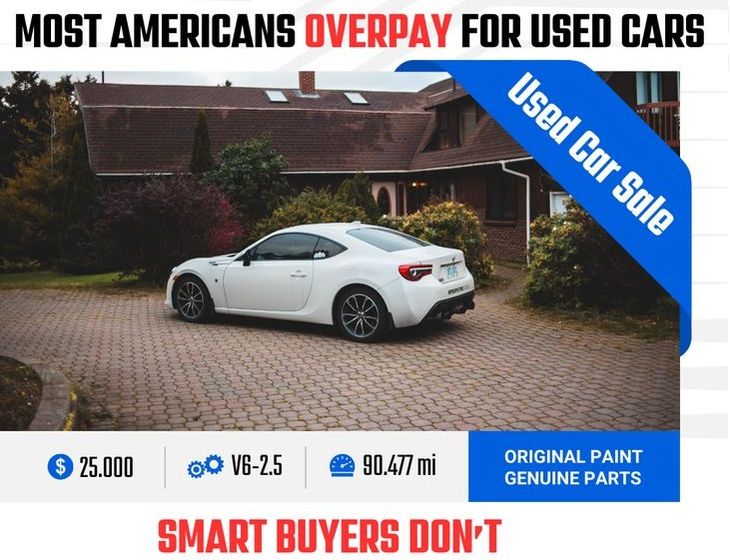
Most guys overpay for used cars.
Not because they are careless.
Because they shop in the wrong places.
In the U.S., the average used car price hovers around $25,000.
Dealer markups can add $1,500 to $4,000 on top of what the car is really worth.
That is real money. That is a vacation. A new tool set. A few months of mortgage.
If you know where to look and when to buy, you can save thousands.
This guide shows you exactly how smart buyers find cheap used cars in the U.S.
In Part 2, we will break down how to negotiate like a pro and knock even more off the price.
Let’s start with where the real deals are hiding.
Why Most Men Overpay for Used Cars
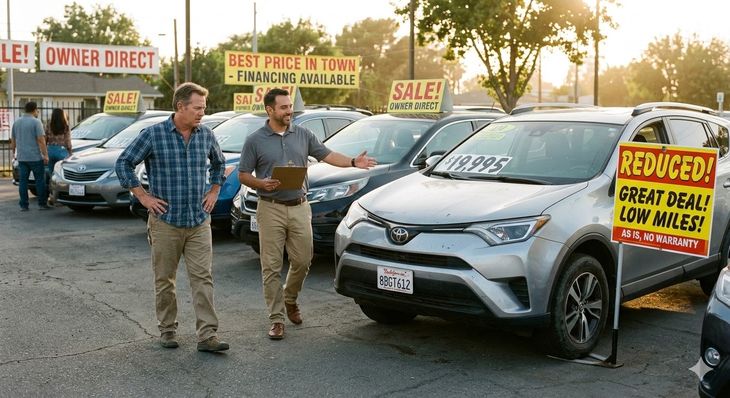
Before we talk strategy, we need to talk mistakes.
Here is what usually happens.
You need a car fast. You walk into a dealership. You see something clean. The salesperson is friendly. You take a test drive. You imagine yourself driving it home.
Then you sign.
The problem is not the car. It is the process.
Common mistakes buyers make:
- Buying from the first place they visit
- Focusing on monthly payment instead of total price
- Skipping market value research
- Assuming dealer pricing is fair
Dealers are businesses. They are not charities. According to industry data, used car dealers often price vehicles above market value to leave room for negotiation.
If you do not know the real value of the car before you show up, you are already behind.
Smart buyers shop first. Visit later.
The 5 Best Places to Find Cheap Used Cars in the U.S
Not all listings are equal. Some platforms are gold mines. Others are traps.
Here are the 5 best sources to find affordable used cars in America.
1. Facebook Marketplace

This is one of the hottest places to find cheap used cars right now.
Why it works:
- Direct seller to buyer
- No dealer overhead
- Many private owners
Private sellers usually want a quick sale. They are not trying to maximize profit. They just want the car gone.
Pro tips:
Search daily. Good deals disappear fast. Use filters for mileage, year, and price. Message sellers with specific questions about maintenance and title status.
Red flag:
If the price looks too good to be true, it probably is. Watch for rebuilt titles and sellers who avoid phone calls.
2. Craigslist

Some say Craigslist is dead. It is NOT.
Many older sellers still use it. That means less competition from younger buyers.
Why this matters:
Less competition means more negotiating power.
Look in nearby cities too. Expanding your search radius by 50 to 100 miles can reveal better prices.
Always meet in a public place. Bring a friend if possible. Safety first.
If you’re not sure which sellers or names are reliable on Craigslist, check out the ones listed below – they won’t let you down.
3. Government and Police Auctions

This is where things get interesting.
Cities, counties, and federal agencies sell fleet vehicles every year. Police cars. Utility trucks. Government sedans.
These vehicles are usually well maintained. They follow strict service schedules.
The upside:
Prices can be significantly lower than retail.
The downside:
Cars are sold as-is. No warranty. No test drive in most cases.
Websites like GovDeals and local city auction pages list upcoming sales.
Do your research before bidding.
Auctions are best for buyers who understand risk.
4. Private Sellers vs Dealerships

Here is the truth.
Buying from a private seller is usually cheaper.
Why?
No reconditioning fees.
No sales commissions.
No dealership overhead.
Example:
A 2018 Ford F-150 might list for $24,500 at a dealership. The same truck from a private seller might list for $21,500.
That is a $3,000 difference.
However, dealerships offer financing and sometimes limited warranties. For some buyers, that peace of mind is worth extra money.
If your goal is the cheapest used car possible, private sellers are often the better route.
5. Certified Pre-Owned Programs
Certified Pre-Owned vehicles are inspected and backed by manufacturer warranties.
They are not the cheapest option. But they can be a smart middle ground.
If you want reliability but still want to save compared to new, this is worth considering.
Just remember.
You are paying for that certification. Compare the price difference between certified and non-certified versions of the same model.
Sometimes the gap is small. Sometimes it is thousands.
The Timing Trick Most Buyers Ignore
Timing matters more than most people think.
Car prices shift throughout the year.
Best times to buy:
- End of the month
- End of the quarter
- December
Dealerships have sales targets. When they are close to quota, they are more flexible.
December is powerful because:
- Dealers want to clear inventory before the new year
- Buyers are distracted by holidays
- Demand drops in colder states
Winter is also slower for sports cars and convertibles. Summer is slower for SUVs in some regions.
Supply and demand drive price.
Buy when demand is low.
How to Check Market Value Before You Call the Seller
Never contact a seller before you know the real market value.
Use these tools:
- Kelley Blue Book
- Edmunds
- NADA Guides
- CarGurus
Compare at least five similar listings.
Same year.
Similar mileage.
Same trim level.
Example:
If a 2018 Ford F-150 with 80,000 miles averages $22,000 in your area and someone lists it for $25,000, you know there is room to negotiate.
Knowledge is leverage.
Also check the vehicle history through Carfax or AutoCheck. A clean title with no accidents holds more value.
Expand Your Search Radius
Many buyers only search within 20 miles.
That is a mistake.
Expand to 100 miles. Even 200 if you are serious.
A two-hour drive could save you $2,000.
Rural areas often have lower prices than big cities. Less demand. Lower overhead. Just factor in travel cost and time.
What You Should Never Say When Contacting a Seller
First impressions matter.
Do not open with:
“Is this still available?”
That screams low effort.
Instead, ask specific questions:
- Has the car had any major repairs?
- Do you have maintenance records?
- Is the title clean and in your name?
Do not mention your budget.
Do not say you love the car.
Stay neutral. Calm. Professional.
You are gathering information. Not committing.
We will go deeper into negotiation tactics in Part 2. That is where real savings happen.
Quick Recap. How to Find Cheap Used Cars in the U.S
Here is what smart buyers do:
- Shop online before visiting in person
- Compare at least five similar listings
- Focus on private sellers for lower prices
- Check vehicle history reports
- Buy during slow sales periods
- Expand search radius
Finding a cheap used car is only half the game.
Anyone can find a listing.
Very few know how to control the final price.
In Part 2, you will learn the exact negotiation strategies that can cut $1,000 to $3,000 off the asking price. You will also see the dealer tricks most buyers fall for and how to shut them down.
Do not skip it.
Because the real savings start at the negotiation table