
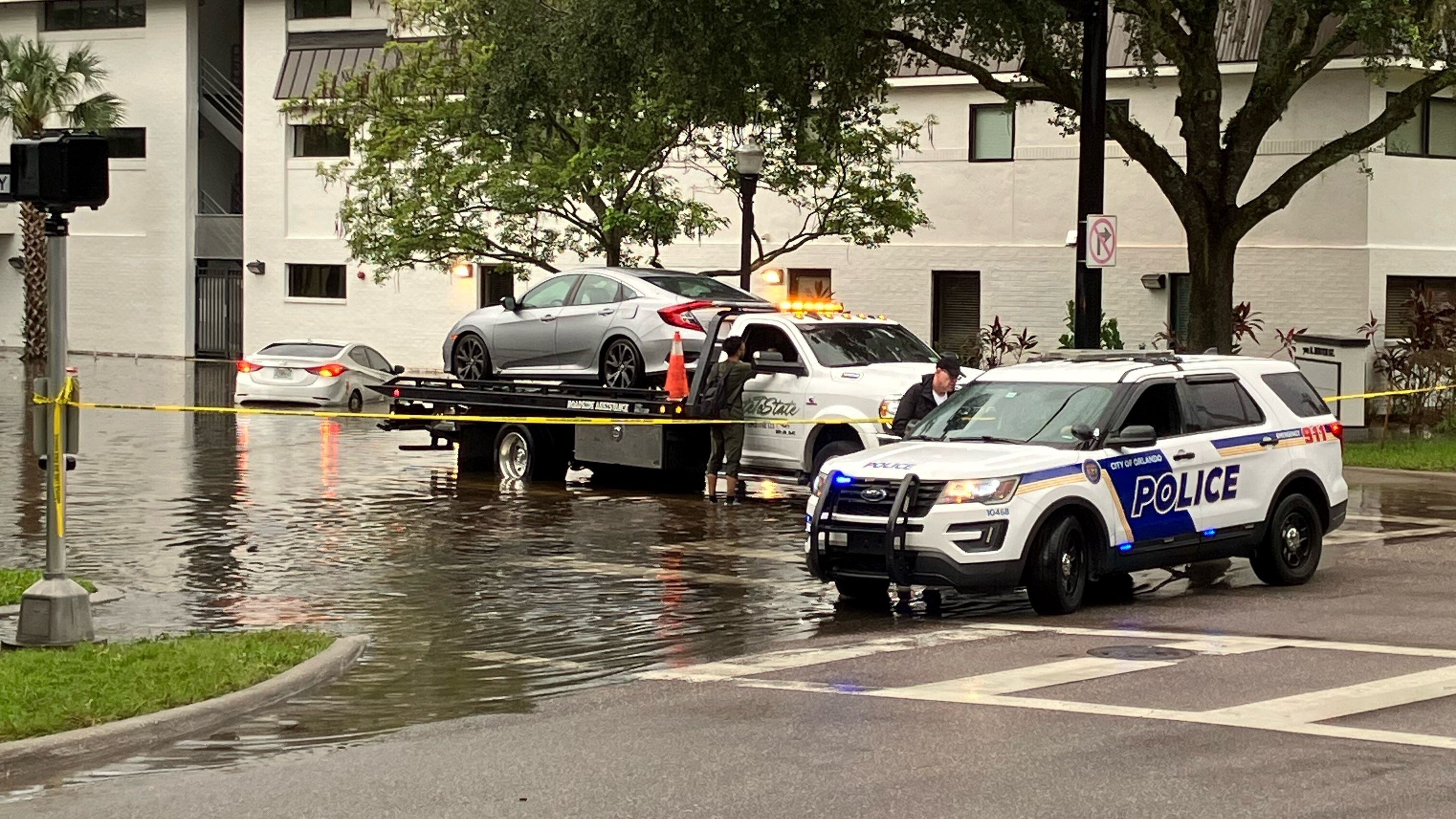
On September 1, 2024, a powerful storm hit downtown Orlando, leaving streets flooded and several cars stranded in the rising waters.
The intense rainfall overwhelmed the city’s drainage systems, causing widespread flooding, particularly along Summerlin Avenue and other downtown streets.
Several residents had to be rescued from their cars, some of which were submerged in water, as roadways became impassable.
As the waters slowly began to subside, some roads remained closed, and the city focused on cleanup efforts.
But what caused this sudden and severe flooding, and how did it affect Orlando’s residents? Here’s a look at the storm’s impact and the response to this unexpected weather event.
A Sudden Storm Causes Devastating Flooding
The storm hit Orlando with little warning, and within hours, streets were completely submerged. Downtown Orlando, with its low-lying areas and older infrastructure, was particularly vulnerable to flash floods.
Heavy rainfall overwhelmed drainage systems, causing streets to turn into rivers. Cars were quickly trapped in the floodwaters, with some vehicles partially or fully submerged.
The chaos caught many residents by surprise, as the storm intensified rapidly, leaving little time for preparation.
Rescue Operations: People Trapped in Their Cars
The flooding caused immediate safety concerns as several cars got stuck in the rising water. Local rescue teams sprang into action, working to rescue drivers and passengers trapped in their vehicles.
One of the most notable incidents occurred along Summerlin Avenue. Davida Kerns, whose daughter was driving in the area, spoke to Channel 9 about the ordeal.
As the storm intensified, Kerns’ daughter found herself trapped in the floodwaters. The water levels rose so high that she could no longer distinguish between the sidewalk and the road.
In a desperate attempt to avoid deeper water, she drove her car into the flooded front yard of a business near Lake Olive, where it became fully submerged.
It was only after a swift response from rescue teams that Kerns’ daughter was safely brought to safety. This was just one example of the numerous rescue operations carried out by emergency responders across the city.
The Ongoing Aftermath: Impact on Streets and Infrastructure
As the floodwaters began to recede, many of Orlando’s roads remained closed, with some areas still inundated by water.
Summerlin Avenue and other key downtown streets were impassable for several hours, leaving commuters and residents stranded.
In addition to flooding, the storm caused damage to infrastructure. One of the affected areas included a streetlight that had been knocked out during the storm, leaving portions of downtown in the dark.
Fortunately, city crews quickly repaired the streetlight, but the storm’s impact on the city’s infrastructure was felt across the area.
Emotional and Financial Toll on Orlando’s Residents
The flood caused more than just inconvenience. For many residents, the storm left behind significant emotional and financial stress.
Kerns, who spoke about her daughter’s terrifying experience, expressed frustration over the damage to her vehicle and the loss of personal items. “We work hard for our money, and we don’t deserve this,” she said, as she reflected on the personal toll the flooding had taken.
Others, like Jennifer, a local resident from Arlington, shared similar feelings of frustration. Her car had also been struck by the flood, although it wasn’t submerged. “I’m very, very aggravated, very pissed off. I work every day. Every month my paycheck goes to this car,” she said.
Despite the severe damage to infrastructure and vehicles, residents were more upset with the sense of vulnerability that such storms bring, especially given how quickly the city was overwhelmed.
The Need for Better Preparedness and Flood Mitigation
This storm highlighted a larger issue — Orlando’s vulnerability to flash floods. The storm overwhelmed the city’s infrastructure, and many residents felt that the city was unprepared for such intense weather.
As Jennifer put it, “The city needs to do something because this is out of control.” It’s clear that better flood management and improved drainage systems are necessary to prevent such chaos in the future.
The City’s Response: Immediate Action and Long-Term Solutions
The city of Orlando responded quickly to the immediate crisis, with rescue teams and local authorities doing their best to minimize the damage.
However, as Kerns and other residents pointed out, the storm exposed the flaws in the city’s infrastructure, particularly when it comes to handling large volumes of water.
In addition to repairs to damaged infrastructure, Orlando officials will need to focus on improving stormwater management systems.
The flooding event has sparked renewed conversations about the city’s preparedness for extreme weather and whether Orlando is doing enough to protect residents from future storms.
Moving Forward: Investing in Resilient Infrastructure
As Orlando continues to recover from this flood, residents and city leaders will need to discuss long-term solutions to prevent future flooding.
Experts recommend that the city invest in improved drainage systems, better flood forecasting tools, and upgraded infrastructure to handle the increasing frequency and intensity of storms.
The Bigger Picture: Climate Change and Increased Storm Frequency
While this storm was a significant event for Orlando, it is just one example of the larger trend of increasing weather extremes seen across the country.
As climate change contributes to more intense storms, cities like Orlando will face even greater risks from flash floods and other extreme weather events.
Cities must be proactive in building climate-resilient infrastructure that can withstand these challenges.
In addition to improving drainage systems, Orlando’s emergency response plans should be reevaluated to ensure they are capable of handling the increased demands posed by frequent, severe storms.
Conclusion: Preparing for Future Storms and Floods
The flooding event in downtown Orlando was a stark reminder of the dangers posed by extreme weather events.
While immediate rescue efforts helped minimize harm, the city’s response to such events needs to go beyond short-term fixes.
To better prepare for future storms, Orlando must invest in flood mitigation, improved infrastructure, and stronger emergency planning.
As climate change continues to drive unpredictable weather, the time for proactive measures is now.