
Braking is one of those things we rarely think about—until it’s the only thing that matters.
Every time you stop at a red light or slow down for a turn, your car’s braking system works silently and efficiently to keep you safe.
But behind this seamless experience is a design decision that’s as much about performance as it is about practicality: disc brakes at the front and drum brakes at the rear.
This isn’t just a compromise—it’s a carefully engineered solution to maximize efficiency while keeping costs in check.
Let’s dive into the science and economics behind this combination and uncover why it works so well.
The Physics of Braking: Why the Front Takes the Load
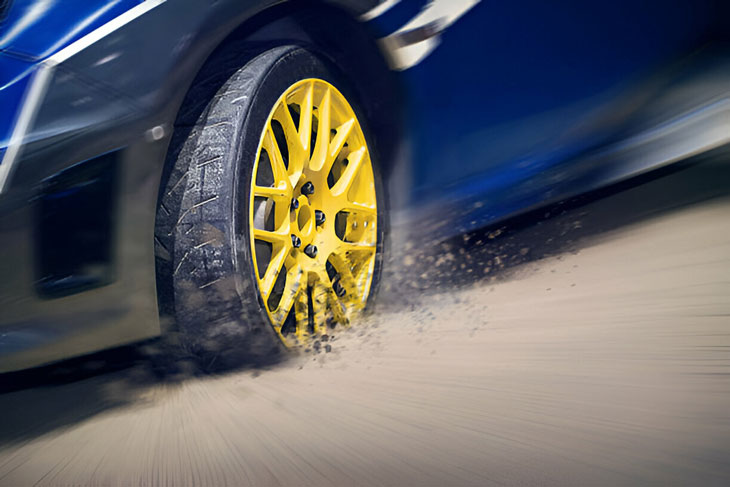
Braking is more than just slowing down—it’s a redistribution of force. Every time you hit the brakes, your car’s momentum causes a weight transfer toward the front wheels.
This isn’t a design flaw; it’s physics in action.
a. The Science of Weight Transfer
- Normal Weight Distribution: Most cars are naturally front-heavy, with a 60:40 weight distribution in favor of the front wheels under normal conditions.
- Dynamic Weight Transfer: When braking, the momentum shifts the center of gravity forward, loading up to 80% of the vehicle’s weight onto the front wheels. The rear wheels carry significantly less force, which is why their braking demands are lower.
- Impact on Stopping Power: Front wheels must bear the brunt of the braking force to ensure stability and minimize stopping distances. This demand for high efficiency makes disc brakes essential for the front axle.
b. Role of Front Brakes in Stability
- Prevention of Skidding: The heavier load on the front wheels increases friction, reducing the likelihood of skidding.
- Controlled Deceleration: Front brakes absorb the majority of kinetic energy, ensuring a smooth, controlled stop instead of an abrupt jolt.
Without this balance, braking efficiency would drop significantly, affecting not only stopping time but also vehicle control.
Disc Brakes: Efficiency Where It Matters Most
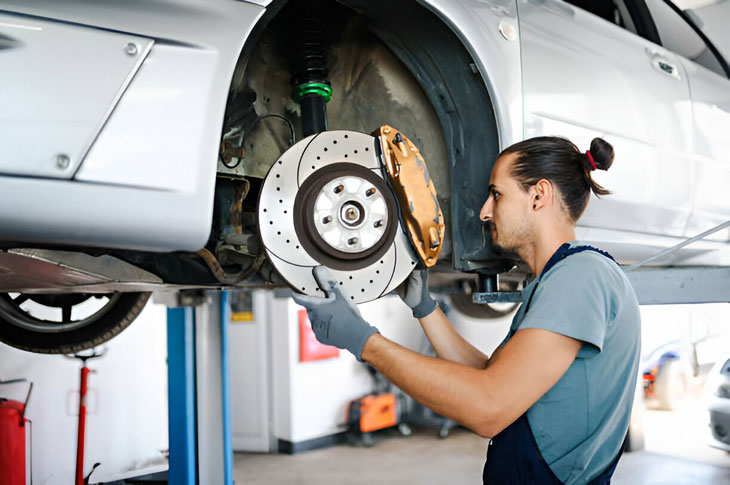
Disc brakes are the backbone of modern braking systems. Their performance in high-pressure scenarios is unmatched, making them indispensable for the front wheels.
a. Superior Heat Management
- Why Heat Matters: Braking converts kinetic energy into heat. Excessive heat buildup can lead to brake fade, where friction materials lose effectiveness, compromising safety.
- Open-Air Design: Unlike drum brakes, disc brakes are exposed to air, allowing for continuous cooling.
- Ventilated and Perforated Rotors: Modern disc brakes often feature ventilated or slotted rotors to increase airflow and accelerate heat dissipation. This ensures consistent braking power during repeated or prolonged use, such as downhill driving.
b. Exceptional Stopping Power
- Hydraulic Precision: Disc brakes use a hydraulic caliper to press brake pads against the rotor. This system provides immediate and reliable stopping force.
- Rain and Dirt Resistance: Because of their exposed design, disc brakes are less likely to collect water or debris, maintaining effectiveness in challenging weather conditions.
c. Durability and Maintenance
- Longevity Under Stress: Front brakes endure greater wear due to their workload, but disc brakes are designed to handle the pressure without degrading quickly.
- Ease of Replacement: While they may wear out faster than rear drum brakes, disc brake components like pads and rotors are straightforward to replace.
Drum Brakes: Simplicity Meets Cost-Effectiveness
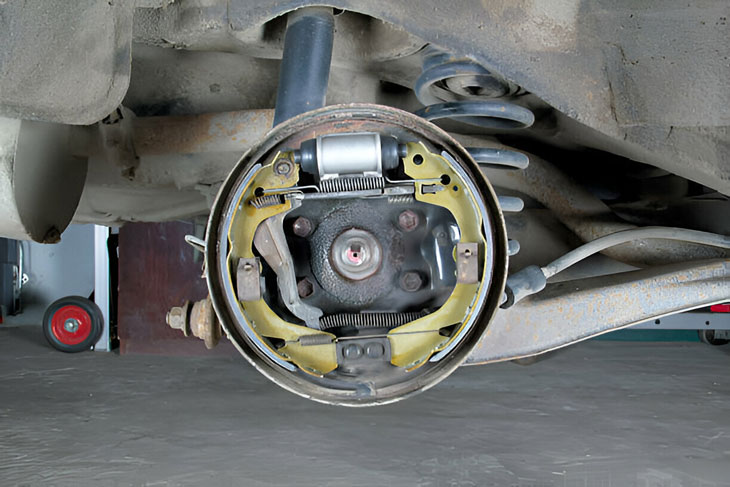
Drum brakes might not have the same stopping power as disc brakes, but their design makes them a practical choice for the rear wheels.
a. Efficiency for Rear Braking
- Lower Braking Demands: With less weight on the rear wheels, they contribute only 20-30% of the braking force. Drum brakes can easily handle this reduced workload.
- Integrated Parking Brake: Drum brakes include a simple mechanism that doubles as a parking brake, eliminating the need for additional components.
b. Cost-Effective Design
- Simpler Mechanism: Drum brakes use fewer moving parts and don’t require advanced hydraulic systems, keeping manufacturing and repair costs low.
- Affordability for Drivers: Repairs and replacements are economical, making them ideal for budget-conscious vehicle owners.
c. Maintenance and Performance
- Longevity in Low-Stress Roles: Rear brakes are subject to less wear and tear, allowing drum brakes to last longer than their front counterparts.
- Adjustment Needs: While drum brakes require occasional adjustment to maintain peak performance, this process is simple and infrequent.
Finding the Balance: Why This Combo Works
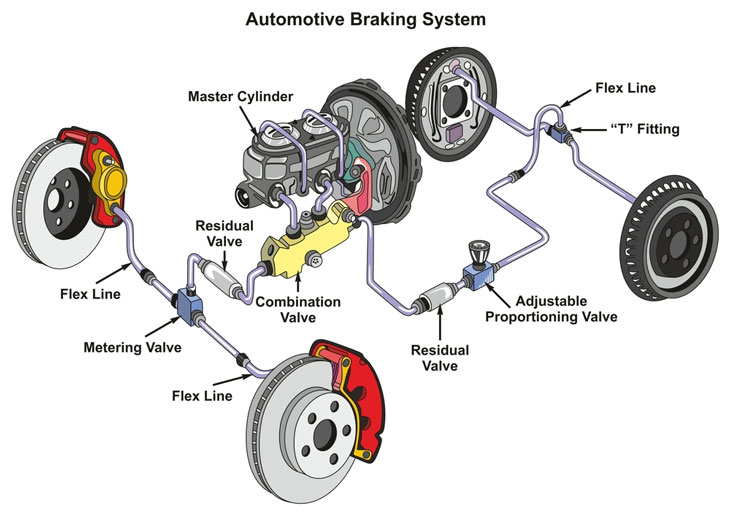
The combination of front disc brakes and rear drum brakes isn’t about cutting corners—it’s about delivering the best of both worlds.
a. Optimized for Everyday Driving
- Efficiency Where It Counts: Disc brakes provide the necessary stopping power for the front, where it’s needed most, while drum brakes handle the rear’s lighter demands.
- Smooth Transitions: This setup ensures consistent braking performance, avoiding jerky stops or uneven wear.
b. Cost-Effective Engineering
- Smart Resource Allocation: Using drum brakes in the rear reduces manufacturing costs, making vehicles more affordable without sacrificing safety or reliability.
- Lower Maintenance Expenses: Drivers save money on rear brake maintenance, as drum brakes are inexpensive and durable.
c. Seamless Integration with Modern Systems
- Anti-Lock Braking Systems (ABS): This setup works seamlessly with ABS, which ensures that neither set of brakes locks up during sudden stops.
- Balanced Performance: The combination guarantees that both front and rear brakes perform their roles without overburdening either system.
Conclusion
Every time you drive, your car’s braking system is quietly working to keep you safe.
The combination of front disc brakes and rear drum brakes represents thoughtful engineering tailored to real-world needs.
Disc brakes handle the heavy lifting with precision and reliability, while drum brakes provide economical, practical support at the rear.
This balance isn’t just about cutting costs—it’s about creating a braking system that’s efficient, affordable, and dependable.
By understanding the why behind this design, you gain a deeper appreciation for the system that stops not just your car, but potentially life’s unexpected moments.