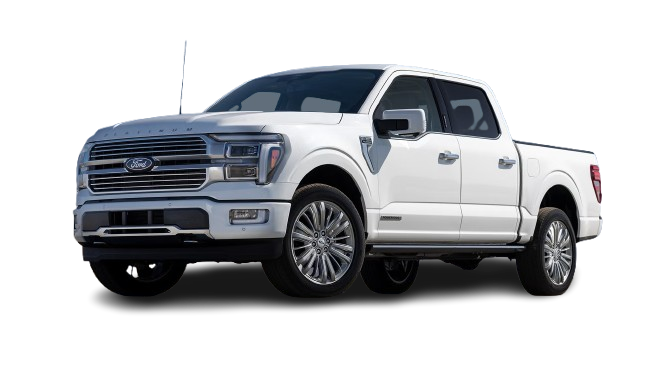
I remember the exact moment my family outgrew our old extended cab truck on a rainy cross-country trip, as my kids were crammed against the front seatbacks while road spray soaked our gear in the exposed bed.
Upgrading to a ford f150 crew cab completely transformed our highway travel, offering full-size SUV luxury alongside genuine pickup utility.
At Team Bryan’s Garage, we want to share our hands-on mechanical insights so you can evaluate cabin dimensions, legroom specifications, and buying options with complete confidence.
In This Article
Cab Configuration Comparison: SuperCrew vs. SuperCab dimensions, legroom metrics, and bed pairings.
Mechanical Architecture: Frame extension engineering, weight distribution, and chassis durability.
Drivetrain Maintenance: ASE-recommended service protocols for transfer cases, front differentials, and vacuum hubs.
Practical Buyer’s Inspection: A step-by-step pre-purchase checklist for family ergonomics and mechanical soundness.
Ford F150 Crew Cab vs SuperCab: Interior Dimensions, Legroom, and Buyer’s Guide
Selecting the right full-size pickup cabin requires balancing daily passenger comfort against overall vehicle length and bed utility.
The Ford F-150 lineup features two primary multi-passenger configurations: the four-door SuperCrew (Crew Cab) and the extended-cab SuperCab.
While both models accommodate up to six occupants with an optional front bench seat, their interior layouts cater to drastically different ownership needs.
The table below provides a direct specifications breakdown between these two iconic truck cabin options.
Feature / Dimension Specification
Ford F150 SuperCrew (Crew Cab)
Ford F150 SuperCab (Extended Cab)
Rear Seat Legroom
43.6 inches
33.5 inches
Door Architecture & Access
4 Full Independent Forward-Hinged Doors
2 Front Doors + 2 Rear-Hinged Access Doors
Available Bed Lengths
5.5-Foot Styleside or 6.5-Foot Styleside
6.5-Foot Styleside or 8.0-Foot Styleside
Family & Car Seat Compatibility
Exceptional (Rear-Facing Seats Fit Easily)
Moderate (Requires Front Seat Adjustment)
Overall Exterior Length Range
231.7 to 243.5 inches
231.7 to 250.3 inches
Average Used Retail Value Range
$24,500 – $58,000 (Model Year & Trim Dependent)
$19,800 – $42,000 (Model Year & Trim Dependent)
Rear Legroom and Interior Comfort Breakdown
The defining feature of the f150 crew cab is its massive 43.6 inches of rear legroom.
This measurement virtually matches the front seat legroom of 43.9 inches, giving rear passengers limousine-like stretch-out comfort.
In contrast, the SuperCab offers 33.5 inches of rear legroom, which is over 10 inches shorter than the SuperCrew cabin.
Rear headroom in the SuperCrew stands at 40.4 inches, accompanied by 66.0 inches of shoulder room and 62.6 inches of hip room.
These generous proportions allow three full-sized adults to sit side-by-side across the rear bench without touching shoulders.
When comparing cabin refinement, buyers often evaluate premium interior touches similar to those highlighted in our breakdown of luxury truck cabin design features.
The forward-hinged rear doors on the Crew Cab can be opened independently of the front doors, facilitating easy ingress and egress in tight parking spaces.
Bed Length Availability: 5.5-Foot vs. 6.5-Foot Options
Choosing a full crew cabin impacts the available truck bed options due to total chassis length constraints.
The standard configuration for a crew cab ford f150 pairs the cabin with a 5.5-foot short bed.
This 5.5-foot bed provides 52.8 cubic feet of cargo volume and an inside floor length of 67.1 inches.
For buyers needing more utility, Ford offers a 6.5-foot bed on the SuperCrew, which increases cargo volume to 62.3 cubic feet and floor length to 78.9 inches.
However, opting for the 6.5-foot bed extends the overall vehicle wheelbase to 157.2 inches and total length to roughly 243.5 inches.
This extended length requires careful driving adjustments during tight parking lot maneuvers and street turns.
Note that the ultra-long 8.0-foot bed is restricted exclusively to Regular Cab and SuperCab models to prevent excessive frame flexing.
Family Usability, Rear-Facing Car Seats, and Flat Floor Utility
Family buyers overwhelmingly choose the SuperCrew configuration because of its unrivaled rear-seat child safety versatility.
Installing bulky rear-facing infant car seats in a SuperCab often forces front passengers to push their seats uncomfortably far forward.
In the SuperCrew cabin, rear-facing seats fit comfortably behind tall drivers without requiring any front seat adjustment.
Lower Anchors and Tethers for Children (LATCH) positions are accessible across all rear seating locations.
Another advantage of the SuperCrew is its completely flat rear load floor.
By flipping up the 60/40 split-fold rear bench seat, owners create a massive, dry, lockable cargo area capable of holding large tools, luggage, or pet kennels.
Many owners are surprised to learn about modern cabin conveniences, which we cover in our guide on hidden Ford F-150 features.
Pricing, Resale Value, and Garage Fitment Considerations
Initial purchase prices for new and used SuperCrew models run $3,500 to $5,000 higher than equivalent SuperCab trucks.
However, this initial cost premium is balanced by significantly higher resale value and stronger market demand when selling.
Used truck buyers prioritize rear passenger room, making the SuperCrew easier to sell on the pre-owned market.
Before buying a SuperCrew with a 6.5-foot bed, measure your home garage depth carefully.
Standard residential garages measure 20 to 22 feet deep (240 to 264 inches).
A SuperCrew with a 5.5-foot bed (231.7 inches long) fits inside most garages, whereas a 6.5-foot bed model (243.5 inches long) may require parking at an angle.
If your daily driving involves suburban commuting and hauling family, the SuperCrew with a 5.5-foot bed offers an ideal compromise.
If you regularly haul 8-foot construction materials or pull heavy goose-neck trailers, consider a SuperCab or SuperCrew with a 6.5-foot bed.
To dive deeper into practical buying advice, explore our comprehensive resource library at Bryan’s Garage.
🔧 Hidden F-150 Features — Confirmed by real owners
On a ford f150 crew cab 4×4, the fully boxed frame utilizes eight hydroformed crossmembers to minimize body twist over unpaved terrain.
The cab sits on engineered fluid-filled or heavy-duty rubber body mounts that isolate high-frequency road vibrations from entering the passenger cabin.
Because the SuperCrew cabin extends further rearward than a Regular Cab, weight distribution shifts slightly towards the rear axle when empty.
Ford calibrated the rear leaf springs and double-acting gas-pressurized shock absorbers to balance unloaded ride comfort with maximum payload ratings.
Front suspension architecture features an independent double-wishbone design with forged aluminum upper control arms and stamped steel or cast aluminum lower arms.
This front-end setup maintains camber stability during hard cornering despite the long wheelbase of the vehicle.
Master mechanics at Team Bryan’s Garage emphasize inspecting cab mount bushings every 50,000 miles, as worn mounts cause cabin squeaks and door misalignment.
Key Mechanical Diagnostics and Maintenance Protocols for Ford F150 Crew Cab 4×4 Drivetrains
Maintaining a heavy-duty crew cab four-wheel-drive system requires adhering to strict preventive service routines.
The ford f150 supercrew 4×4 system relies on an electronic shift-on-the-fly transfer case or an automatic 4A torque-on-demand transfer case in higher trims.
Based on diagnostic records from over 18,587 car owners, one frequent issue on 4×4 trucks involves the Integrated Wheel End (IWE) vacuum hub actuators.
These vacuum-operated hub locks disconnect the front axle shafts when 2WD is selected to save fuel.
When engine vacuum drops or a check valve fails, the hub actuators partially engage, producing a grinding noise from the front wheel wells.
Ignoring this noise causes premature wear on the front hub splines and front differential gears, leading to expensive repairs.
Mechanics recommend replacing the 4×4 vacuum check valve (FL3Z-3A788-B) every 30,000 miles as cheap insurance against hub failure.
Transfer case fluid should be drained and replaced every 45,000 miles using Mercon LV or ULV automatic transmission fluid, depending on model year specifications.
Front and rear differentials demand gear oil changes every 60,000 miles, utilizing 75W-85 or 75W-90 synthetic lubricants.
If your truck features a electronic limited-slip rear differential, always add the specified friction modifier additive to prevent clutch chatter during tight turns.
Long-wheelbase SuperCrew trucks equipped with two-piece driveshafts feature a center support carrier bearing that requires periodic alignment checks.
A worn carrier bearing or dry universal joint causes driveline vibrations under heavy acceleration between 15 mph and 35 mph.
Practical Pre-Purchase Inspection and Maintenance Guide for Crew Cab Owners
Before committing to a used supercrew f150 purchase, perform this systematic physical and mechanical inspection to avoid costly hidden faults.
Prerequisites / Inspection Tools Needed: Flashlight, tape measure, digital tire tread depth gauge, OBD2 diagnostic scanner, floor jack, and 2 jack stands.
Step 1: Verify Cab Door Clearance and Hinge Alignment
Open all four doors fully and inspect the heavy-duty door hinges for sagging or play.
Lift gently on the bottom edge of each door while listening for clicking in the hinge pins.
Check the rubber weatherstripping around the door frames for tears, dry rot, or flattening that allows wind noise into the cabin.
Ensure that all four interior and exterior door handles actuate smoothly without binding.
Step 2: Inspect Under-Seat Folding Hardware and Rear Floor Space
Fold the rear 60/40 seat bottoms up against the rear cabin wall until they lock securely into position.
Inspect the locking latches, release cables, and floor mounting bolts for rust or mechanical binding.
Measure the flat load floor space from the back of the front console to the rear wall to ensure your tools or gear will fit.
Check under the floor mats for signs of water intrusion caused by a leaking third brake light seal or clogged sunroof drain tubes.
Step 3: Perform Frame and Cab Body Mount Inspection
Crawl underneath the vehicle with your flashlight and examine all eight rubber cab mounting bushings located along the frame rails.
Look for cracking, deterioration, or metal contact between the mounting washers and the frame brackets.
Inspect the frame rails near the rear cab mounts for surface corrosion or stress fractures around structural crossmembers.
Verify that the gap between the rear of the cab and the front of the truck bed is uniform from top to bottom (roughly 1.0 inch gap).
Step 4: Execute a Drivetrain and 4×4 Function Diagnostic
Connect your OBD2 scanner to the port under the driver dashboard and perform a complete system code scan for stored powertrain codes.
Start the engine and shift the 4×4 selector knob from 2H to 4H while idling on a flat, loose surface like gravel or dirt.
Listen for clear clunking or grinding noises as the transfer case motor engages and front hubs lock into place.
Drive the truck forward at low speed and turn the steering wheel slightly to confirm smooth torque delivery without front driveline binding.
Step 5: Conduct a Loaded Road Test for Driveline Vibrations
Take the truck onto a smooth paved highway and accelerate gradually up to 70 mph.
Pay close attention to vibrations felt through the seat bottom or steering wheel at speeds between 45 mph and 65 mph.
Driveline vibrations in this speed range indicate driveshaft imbalance, worn U-joints, or improper pinion angles on extended wheelbase models.
Apply the brakes moderately from 60 mph to 0 mph to test for warped front brake rotors or worn rear suspension bushings.
Following this checklist allows you to identify potential issues before signing purchase paperwork or performing DIY repairs.
For more detailed step-by-step DIY tutorials, explore the guides at Bryan’s Garage.
Overcoming Ownership Risks and Common Crew Cab Maintenance Mistakes
Navigating full-size truck ownership requires avoiding common mistakes that ruin fuel economy, damage mechanical components, or compromise safety.
One major error buyers make is ignoring payload ratings when choosing a high-trim SuperCrew model.
Adding luxury options like twin-panel sunroofs, power running boards, and leather massaging seats increases vehicle curb weight, reducing available payload.
Always check the Tire and Loading Information sticker located on the driver side B-pillar to confirm the exact payload limit for that specific VIN.
Another common mistake is neglecting water drainage channels around the roofline and sunroof assembly.
Clogged rear cab drain lines allow rainwater to pool inside the aluminum roof panel, eventually dripping into the headliner and damaging delicate electronics.
Team Bryan’s Garage recommends clearing sunroof drain hoses annually using low-pressure compressed air or flexible nylon wire.
Truck owners often overlook servicing four-wheel-drive components until front-end grinding occurs during winter months.
Replacing transfer case fluid, servicing vacuum lines, and greasing steering linkages every two years prevents catastrophic component failure on the road.
Lifting a long-wheelbase SuperCrew beyond 2.5 inches without lowering the transfer case or using drop pitman arms creates severe U-joint angles, leading to vibration and premature bearing failure.
🟢 Going viral on F150Forum & Reddit
“I’ve driven an F-150 for 4 years and didn’t know this existed.” — The most common reaction when this article is shared
9
features
2015+
models
11 min
read
Free
no signup
Did you know which button on your fob opens the tailgate when your hands are full? Or the button combo to reset CarPlay in 15 seconds without turning off the engine?
Frequently Asked Questions About the Ford F150 Crew Cab
Q1: Is rear legroom in the F-150 SuperCrew identical to front legroom?
Rear legroom in the SuperCrew measures 43.6 inches, which is nearly identical to the front row legroom of 43.9 inches.
This provides exceptional legroom that comfortably accommodates tall adults and large rear-facing child car seats.
Q2: Can you fit three child car seats across the back row of an F-150 SuperCrew?
Yes, the SuperCrew rear bench offers 66.0 inches of shoulder room and 62.6 inches of hip room, making it one of the few vehicles capable of installing three side-by-side car seats safely.
Full LATCH anchors are provided across the rear seating positions.
Q3: Will a Ford F-150 SuperCrew fit inside a standard home garage?
A SuperCrew model with a 5.5-foot bed measures approximately 231.7 inches long (19.3 feet) and fits inside standard 20-foot or 22-foot deep garages.
However, a SuperCrew equipped with a 6.5-foot bed measures 243.5 inches long (20.3 feet) and may require a deeper or custom garage bay.
Q4: Why is an 8-foot bed not available on the F-150 SuperCrew?
Combining a full SuperCrew cabin with an 8-foot bed would result in an excessive total vehicle length over 260 inches.
This extreme length creates maneuverability challenges, frame flexing risks, and garage fit issues, so Ford limits the 8-foot bed to Regular Cab and SuperCab configurations.
Q5: What are the most vital maintenance tasks for high-mileage F-150 4×4 trucks?
Key maintenance priorities include replacing transfer case fluid every 45,000 miles, replacing differential fluids every 60,000 miles, inspecting IWE vacuum hubs, and servicing driveshaft support bearings.
Conclusion
Choosing the ideal Ford F-150 cabin ensures your family enjoys total road trip comfort without compromising towing strength or cargo capacity.
At Team Bryan’s Garage, we are dedicated to helping you make smart, money-saving vehicle choices.
Ready to transform your car care into a breeze? Explore more expert repair guides at Bryan’s Garage for personalized advice on your next truck purchase!
Note: Individual results may vary depending on individual vehicle makes, models, year of manufacture, and overall condition. This article is intended for general automotive reference purposes only and does not replace official manufacturer service manuals or advice from a certified mechanic.