
Welcome back.
If you’re here from Part 1, you already know about the dead key fob slot, the windows that roll down from 30 feet, and the generator hiding in your truck bed.
If you’re starting here — go read Part 1 first. You’re missing things.
For everyone else: the first nine were the features most owners stumble into eventually.
These next nine? Most owners never find them at all.
The first one will change how you start your truck after every oil change for the rest of the time you own it. It takes three seconds and it’s protecting an engine component that costs $1,200 to replace.
Let’s get into it.
10. Flood Start — The Oil Change Trick That Saves Your Engine
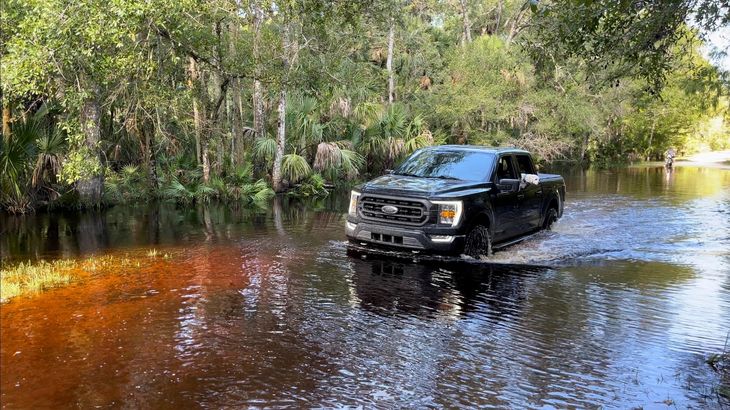
You just changed the oil.
The drain plug is back in. The filter is fresh. Five quarts of clean oil are sitting in the pan, waiting. Every oil passage in the engine — the cam journals, the timing chain oilers, the phaser solenoids — is dry. They’ve been sitting empty since you drained the old oil.
You turn the key. The engine fires immediately.
For the first two to three seconds of that startup, every single one of those components ran without lubrication while the oil pump worked to move fluid through dry passages and build pressure. Cold metal on cold metal. No film. No cushion.
Those seconds add up over years of oil changes. EcoBoost owners know what cam phaser rattle sounds like — that metallic ticking at cold startup that dealers will tell you is “within spec” while quoting you $1,200 for a cam phaser replacement.
A lot of those rattles started at an oil change.
The fix is built into your truck. Ford put it there. And almost nobody uses it.
Before you crank the engine after an oil change: press the accelerator pedal all the way to the floor. Hold it there. Then press the start button.
The truck’s computer reads the floored accelerator as a flood-clear signal — a mode originally designed to clear fuel-flooded cylinders. In this mode, it extends the crank cycle by several seconds before firing the injectors.
During those extra seconds, the oil pump is spinning. Building pressure. Pushing oil through every passage before the engine starts making power.
The engine starts. Oil pressure is already up. The cam phasers get lubrication before load. The ticking never starts.
One habit. No parts. No cost. Potentially extends the life of an engine component by years.
Start doing it at every oil change. Tell your friends who own EcoBoost trucks.
11. The Rear Seat Hides a Storage Room Nobody Talks About
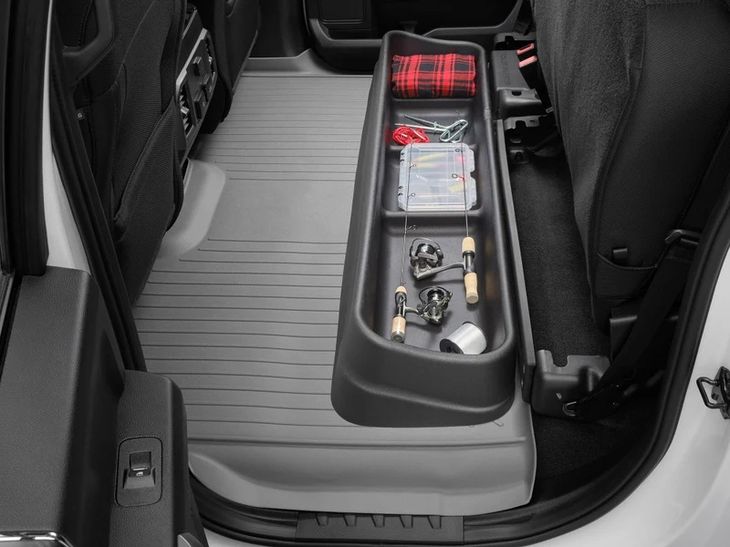
On the rear seatback — not the seat cushion, the back of the seat, toward the top — there’s a latch.
Most owners have never touched it. It looks like part of the trim. It blends in. There’s no label on it, no arrow pointing to it, no callout in the quick-start guide that comes with the truck.
Release the latch. Fold the seatback forward.
Behind it: a tall, vertical storage compartment built directly into the cab wall. Not a cargo net. Not a document pocket. An actual enclosed compartment, hidden inside the seat assembly, invisible from outside the truck.
On a Crew Cab, it’s deep enough to stand a long-handled tool upright. Wide enough to fit a duffel bag. Tall enough that most people’s first response is to quietly reorganize everything they’ve been putting in the bed.
One owner with a 2022 Lariat told a story that’s been shared across multiple forums: he used the truck every single day for eight months before a service technician, watching him load the bed, pointed at the rear seat and said “you know that opens up, right?”
He did not know.
He felt things about that.
This is the compartment that’s locked when the truck is locked, hidden when the seat is up, and completely invisible unless you already know to look for the latch. Which is exactly why the vast majority of owners never find it.
Now you know where the latch is.
12. Your Massage Seat Has a Shortcut Button You’ve Never Pressed
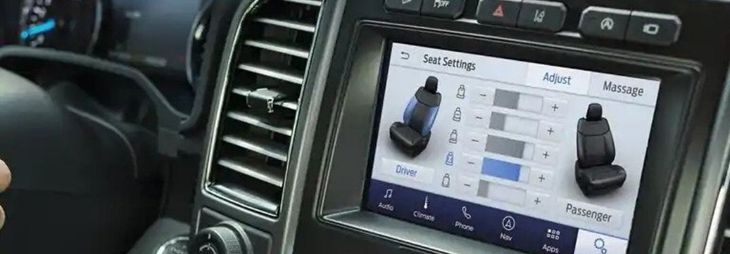
If you paid for the premium seat package, there’s a massage function in your seat. You may already know this.
What you probably don’t know is how to turn it on without taking your eyes off the road for 15 seconds to navigate three menu layers on the touchscreen.
On the outboard side of the seat — the same panel that has the heating, cooling, and lumbar controls — look for the four-way directional pad. In the center of that pad, there’s a round button.
Press it.
Massage activates immediately. The SYNC screen automatically surfaces the massage controls so you can see what’s running and adjust it.
Use the four-way pad to change the intensity or shift which zone is active. After a few seconds of inactivity, the screen returns to whatever it was showing before. No further interaction needed.
No menus. No touchscreen tapping while doing 75 mph. No co-pilot required.
Here’s the thing about this one. The owners who paid extra for ventilated, massaging, power-adjustable seats and don’t know about the shortcut button — they’re still going into Settings, then Seats, then Comfort Features, then Massage, every single time. While driving.
The button on the seat does the same thing in one press.
It has always done this. It is labeled with nothing that explains what it does. And the people who find it by accident usually can’t believe they went this long without knowing.
13. The Center Console Folds Into a Flat Desk
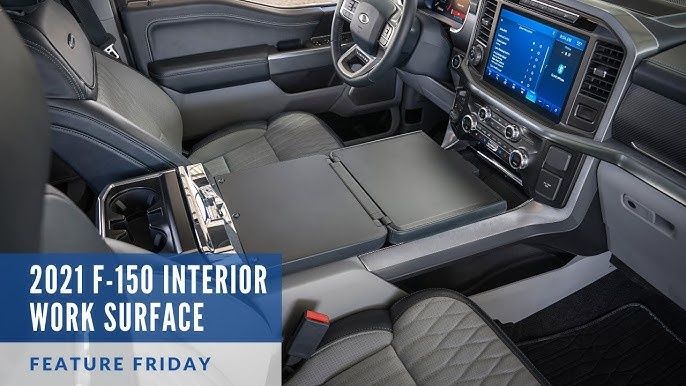
The center console lid opens upward. You know this.
It also folds in the other direction.
Press the release and fold the lid forward — away from you, over the transmission tunnel, toward the dashboard. It extends out and locks flat, creating a work surface that spans the full width of the space between the driver and passenger seats.
Laptop-sized. Level. Stable.
If you spend any meaningful time parked in your truck — making calls, writing estimates, filling out paperwork, eating lunch while pretending it’s a dignified meal — this changes the math on what the interior of your truck can do.
Contractors use it to write up job site notes. Sales reps use it for call sheets. People who eat in their trucks every day use it for the one thing it was obviously designed for, which is to create a surface you can actually set a plate on without balancing it on your thigh.
It was packaged into the truck as a line-item option. It costs nothing to use once it’s there. And most people who have it parked theirs at the desk configuration for the first time six months after buying the truck, by accident, while reaching for something in the console.
14. Advance-Trac Sport Mode Is One Double-Tap Away
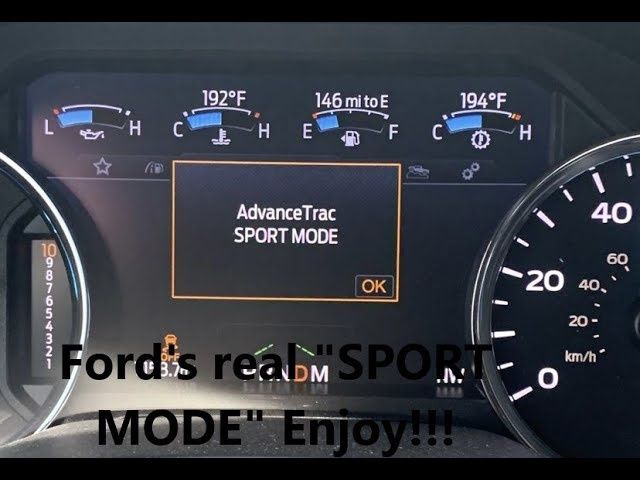
Press the Tow/Haul button.
Now press it again.
The stability control system shifts into a different mode. Not fully off — the truck will still catch you if things go sideways. But less aggressive. More willing to let the rear step out on a loose surface, more responsive to throttle input, less likely to cut power when you’re asking for it on a slippery climb.
It’s called Advance-Trac Sport Mode and it lives behind the second press of a button most owners only press once — or not at all.
Off-road drivers found this first. They noticed the truck handled loose dirt and gravel differently when they accidentally double-tapped during a challenging section. Less intervention. More feel. Better traction management in conditions where the system’s default conservatism was actually working against them.
Highway drivers found it next. Some prefer how the truck responds in this mode even on dry pavement — slightly sharper, slightly more alert.
The feature isn’t listed on the window sticker as its own item. There’s no dedicated Sport Mode button. It lives behind a button you already have, waiting for a second press.
Most owners Tow/Haul once and move on.
Press it twice. See if the truck feels different to you.
15. Your Truck Can Monitor Your Trailer’s Health in Real Time
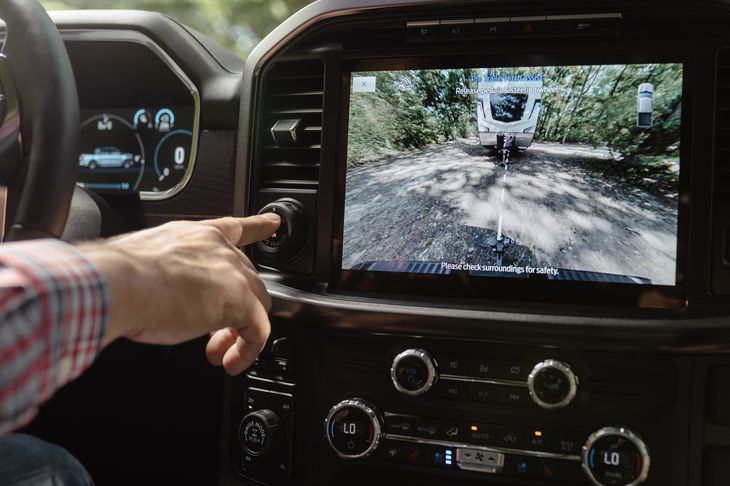
The trailer is hooked up. The ball is seated. You did the walk-around. Everything looks connected.
But is the brake circuit actually sending signal? Is the left turn signal working at the trailer? Is the 7-pin connection fully engaged or just mostly engaged — the kind of connection that works fine in the driveway and fails at highway speed when the cord shifts?
Most people find out the answer to these questions on the highway. Or from a state trooper.
The Smart Trailer Tow Connector monitors the electrical health of the trailer connection in real time and flags problems on the instrument cluster before you leave the driveway. Brake signal. Running lights. Turn signals. Ground connection.
If something’s wrong, you find out while you’re still in the parking lot. Not while merging onto I-20 with a loaded trailer and no brake lights.
This feature doesn’t announce itself loudly. Owners who have it often don’t know it’s active until the first time it flags a problem — then they wonder how they ever towed without it.
16. A 360-Degree Bird’s-Eye Camera Is Already Installed
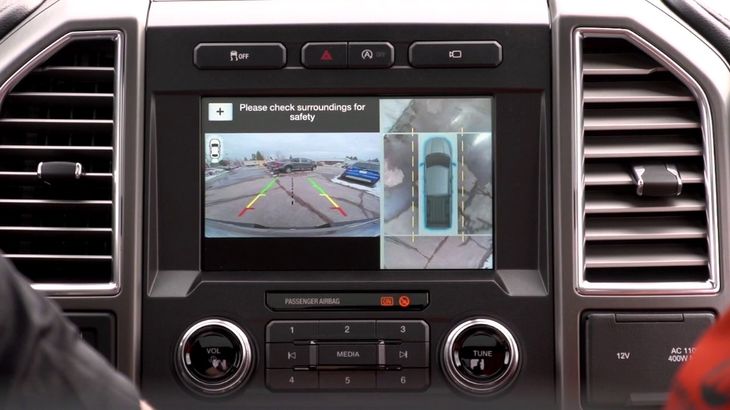
The backup camera gets used. It’s obvious, it’s on by default, and it appears automatically when you shift into reverse.
The 360-degree surround view camera does not behave this way. It’s buried in the camera menu. It doesn’t activate automatically. There is no prompt when you park in a tight space that says “hey, you might want this right now.”
You have to know it’s there and know where to find it.
In the camera view during low-speed maneuvering, there’s a menu. One of the options stitches feeds from four cameras — front, rear, both sides — into a composite overhead image of your truck and the space immediately around it. Like looking down at your vehicle from directly above.
You can see your front bumper’s relationship to the curb. You can see if your rear corner is going to clip the pole you’ve been watching in the side mirror. You can see the full footprint of a six-foot bed in a space that was designed for something smaller.
Most owners park a $70,000 truck using nothing but the standard backup camera — and spend years doing the slow-creep, check-mirror, check-mirror, pray maneuver in tight lots — because nobody mentioned there were other options in the camera menu.
The option is there. It works well. It’s already installed and calibrated on your truck.
Go find it in the camera menu before you need it in a parking structure.
17. Remote Start Unlocks Only the Driver’s Door on Purpose
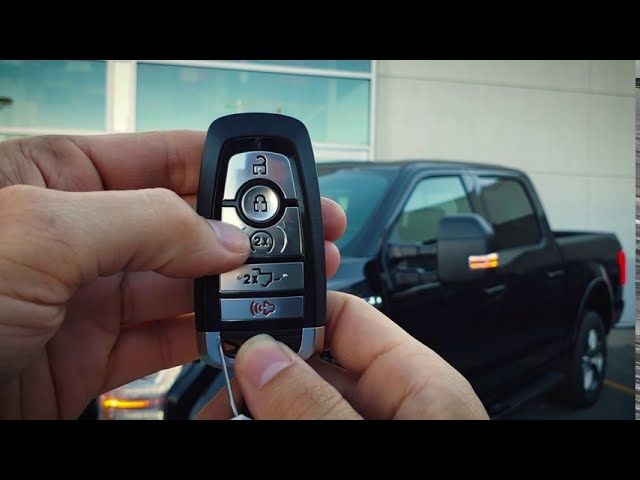
You remote-start the truck from inside the house on a cold morning. Walk out. Reach for the rear passenger door to put your bag in.
Locked.
You try again. Still locked.
The front driver’s door opens fine. Everything else: locked.
It’s not a bug. It’s a setting — and it’s the default setting on most F-150s shipped in North America.
The truck is configured, out of the factory, to unlock only the driver’s door when remote-started. Every other door stays locked until you’re inside and make a conscious decision to unlock them.
This is actually a thoughtful security feature. A truck sitting warm and running in a parking lot or driveway for eight minutes with all doors unlocked is a different security situation than one with only the driver’s door accessible.
But if you put passengers in your truck regularly, or if you load cargo through the rear door, the default setting will quietly drive you insane for months while you assume something is broken.
Go to Settings > Vehicle > Remote Start > Unlock Settings.
Three choices: driver door only, all doors, no doors. Pick the one that matches how you use the truck.
Five menu taps. Solves a frustration that has caused more than one F-150 owner to schedule a service appointment for a feature that was working exactly as designed.
18. Walk Away — Your Truck Has Already Locked Itself
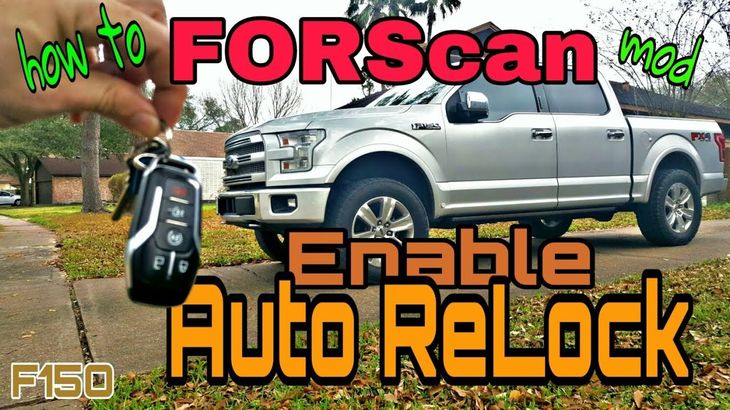
2024+ standard on most trims. 2021–2023 models can enable via FORScan or dealer update
You park. You get out. You start walking toward the store.
About 30 feet away, without any input from you, every door on the truck locks.
No beep. No honk. No visual confirmation. It just happens.
That thought — the one that visits you halfway through the parking lot, hand drifting toward your pocket — did I lock it — is gone. You didn’t lock it. The truck locked it. The truck has been locking it since you turned Walk Away Lock on.
The system reads the key fob signal as you move away from the truck. When the fob passes a certain distance threshold, the locks engage automatically.
It pairs cleanly with a second feature called Auto Re-Lock: if you accidentally press unlock on the fob and don’t open a door within 30 seconds, the truck locks itself again. The accidental pocket-press that unlocks the truck while you’re inside the house having dinner — corrected automatically, without any intervention.
Two passive systems running continuously in the background, handling a pair of low-level anxieties that most truck owners carry every single day.
Your F-150 isn’t just a truck at this point.
It’s a slightly obsessive co-pilot who double-checks the locks every time you leave, never makes a sound about it, and has never once asked for credit.
That’s 18. Here’s What Actually Matters.
The features on this list didn’t cost Ford extra to put in your truck. They were engineered in, validated, built into production — and then mostly not mentioned.
Not at the dealership. Not in the quick-start guide. Not in the feature walkthrough when you picked the truck up.
You were expected to read a 400-page owner’s manual.
The fact that you’re here instead means you found out about the picnic table approach to truck ownership: discover the hidden stuff, use it every day, and feel the quiet satisfaction of knowing your truck better than most people who own the same one.
The Flood Start trick alone is worth bookmarking this page. Use it every oil change, every time, forever.
The rest of them — press the buttons, open the latches, double-tap the mode you’ve been single-tapping since you bought the truck.
You’ve been sitting on more F-150 than you knew.
[← Back to Part 1: 9 Things Your Ford F-150 Can Do That Nobody Told You About]
Got a feature we missed? Drop it in the comments below. This list was built from real owners across Reddit, F150Forum, F150gen14, and the F150 Tremor Forum. There’s always one more hiding somewhere — and someone in the comments always knows what it is.