
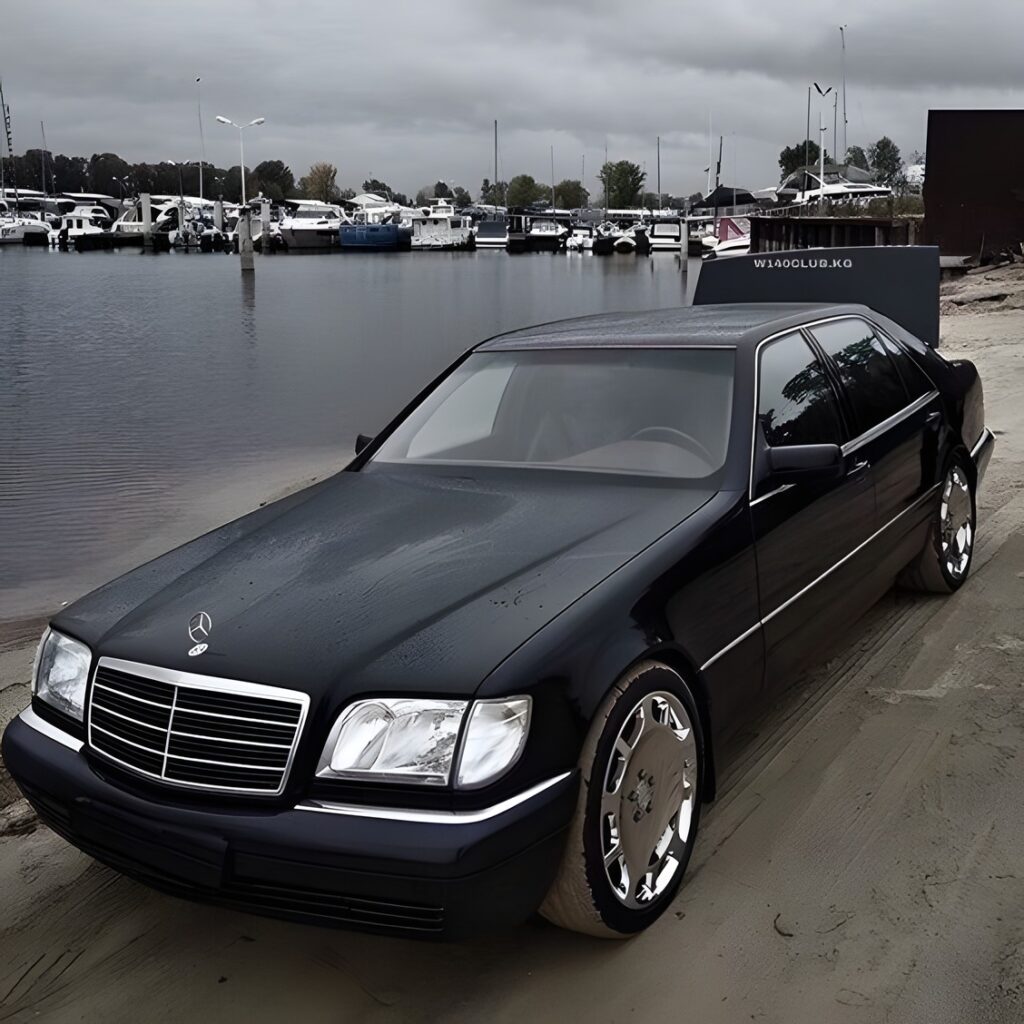
Picture this: I’m 16, sitting in my uncle’s garage, staring at his prized possession—a sleek, black Mercedes-Benz W140 S-Class from the ‘90s. The kind of car that looks like it could star in a spy movie.
I begged him to let me sit in the driver’s seat, and when I did, I felt like I’d just been handed the keys to a spaceship. The leather smelled like luxury, the dashboard lit up like a Christmas tree, and I swear I heard angels sing when I turned the key.
Okay, maybe that last part was just the engine purring, but you get the idea. That moment sparked my obsession with Mercedes-Benz, and years later, I learned that car wasn’t just a pretty face—it was packed with innovations that changed the game for every vehicle on the road today.
Let’s dive into the top 5 hidden innovations from classic Mercedes-Benz models that shaped the cars we drive now, with a few laughs and memories along the way.
1. Airbags That Saved More Than Just Face
Let’s start with something we all take for granted today: airbags. Mercedes-Benz was one of the first to bring this lifesaver to the masses back in 1981 with the W126 S-Class. Now, I know what you’re thinking—airbags, big deal, right?
But back then, it was revolutionary. Cars were basically metal death traps with seatbelts that felt more like a suggestion than a safety feature. Mercedes teamed up with Bosch to develop a driver-side airbag that could deploy in milliseconds, cushioning you like a giant marshmallow in a crash.
I remember my dad telling me about his first car—a rickety old sedan from the ‘70s with no airbags. He’d say, “If I got into a fender bender, I’d be eating the steering wheel for lunch!” Fast forward to the ‘90s, and Mercedes was already rolling out passenger-side airbags and side-impact airbags in models like the W140.
Today, airbags are standard in every car, but Mercedes-Benz was the one who said, “Hey, maybe we shouldn’t let people play bumper cars with their faces.” Next time you’re driving and see that little “SRS” logo on your steering wheel, give a nod to Mercedes for keeping your nose intact.
2. ABS: Braking Without the Heart-Stopping Skid
Here’s a fun fact: Mercedes-Benz introduced the world’s first anti-lock braking system (ABS) to production cars in 1978, again with the W116 S-Class.
ABS stops your wheels from locking up when you slam on the brakes, so you don’t end up sliding into a ditch—or worse, the car in front of you. Before ABS, braking hard on a wet road was like playing a high-stakes game of slip-and-slide. You’d pray, grip the wheel, and hope for the best.
I’ll never forget the time I borrowed my friend’s beat-up pickup truck in college. It was pouring rain, and I had to brake hard at a stoplight. The truck skidded like it was auditioning for a Fast and Furious movie, and I ended up halfway into the intersection, heart pounding.
If only that truck had ABS! Mercedes-Benz worked with Bosch (again, those two were like the Batman and Robin of car tech) to make sure you could brake hard and still steer.
By the time the ‘90s rolled around, ABS was standard in most Mercedes models, and soon, every car manufacturer followed suit. So, the next time you stop safely on a rainy day, thank Mercedes for keeping your car—and your dignity—intact.
3. Electronic Stability Control: The Invisible Hand Keeping You on the Road
Now, let’s talk about something that’s basically magic: Electronic Stability Control (ESC). Mercedes-Benz rolled this out in 1995 with the W140 S-Class, the same model I drooled over in my uncle’s garage.
ESC uses sensors to detect when your car is about to skid or spin out, then applies brakes to individual wheels to keep you on track. It’s like having a guardian angel who whispers, “Nope, you’re not crashing today.”
I learned about ESC the hard way. A few years ago, I was driving a rental car on a winding mountain road—feeling a bit too confident, I’ll admit. I took a turn too fast, and the car started to slide.
I panicked, but suddenly, the car corrected itself, like it had a mind of its own. Turns out, that little sedan had ESC, a technology Mercedes-Benz pioneered. Back in the ‘90s, they called it ESP (Electronic Stability Program), and it was a game-changer.
By 2012, ESC was mandatory in most new cars in the U.S. and Europe because it was proven to reduce rollover crashes by up to 80%. Mercedes-Benz basically invented the tech that keeps us from turning our cars into expensive pinatas. Pretty cool, huh?
4. Self-Closing Doors: Luxury That Feels Like Magic
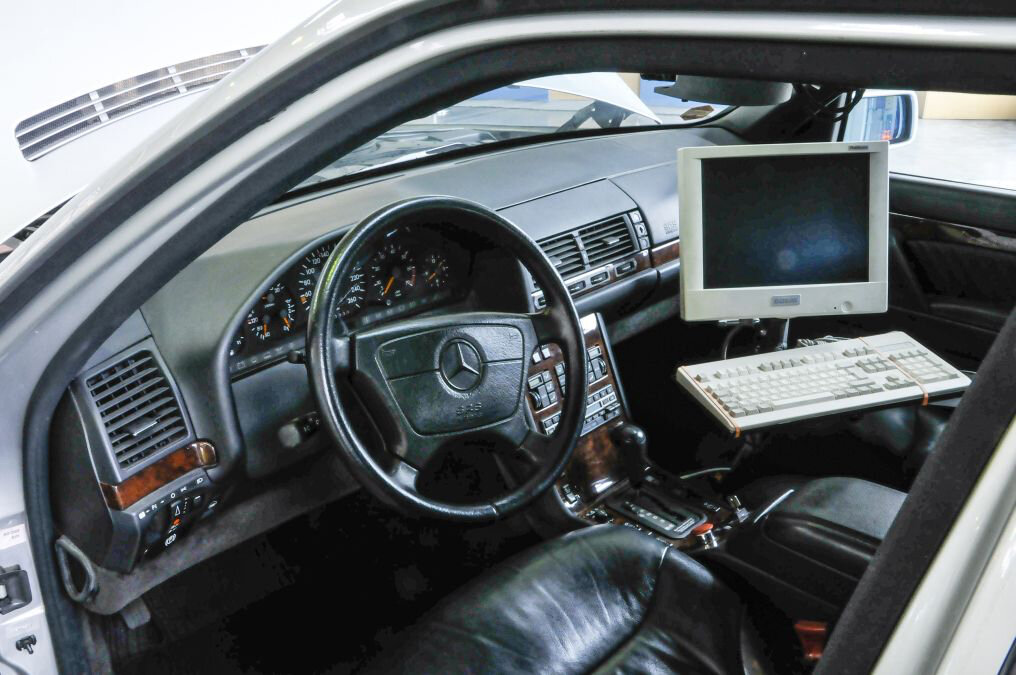
Okay, this one’s a bit more “fancy” than “life-saving,” but it’s still awesome. In the early ‘90s, Mercedes-Benz introduced self-closing doors on the W140 S-Class.
If you didn’t shut the door all the way, a little motor would gently pull it closed for you. It’s the automotive equivalent of having a butler who says, “Allow me, sir,” while tipping his hat.
I experienced this feature firsthand when I got to ride in my uncle’s W140. I was so nervous about slamming the door too hard that I barely closed it. Then, with a soft whirr, the door shut itself perfectly.
I felt like I’d just stepped into the future—or at least into a James Bond movie. Mercedes-Benz added this feature to make sure their luxury cars felt, well, extra luxurious. It’s the kind of thing that makes you go, “Wow, I need to make more money so I can live like this all the time.”
While self-closing doors are more of a novelty today, they set the tone for the kind of over-the-top luxury Mercedes is known for. Plus, it’s just plain fun to watch a car do your chores for you.
5. Crumple Zones: The Art of Controlled Chaos
Last but not least, let’s talk about crumple zones—a safety feature that’s all about controlled destruction. Mercedes-Benz started refining this concept in the 1950s, but it really took off in their production cars by the ‘70s and ‘80s, especially in models like the W126 S-Class.
Crumple zones are parts of the car designed to deform in a crash, absorbing energy so the passenger cabin stays intact. It’s like the car takes one for the team so you don’t have to.
I remember watching a documentary where they crash-tested an old Mercedes-Benz against a modern car. The Mercedes crumpled exactly where it was supposed to, while the passenger area looked untouched.
The narrator said, “This car sacrifices itself to save you.” I mean, how heroic is that? Mercedes-Benz worked with engineers to perfect this design, and by the ‘90s, crumple zones were standard in every car they made.
Today, every vehicle on the road uses this tech, but Mercedes-Benz was one of the first to say, “Let’s make crashing a little less catastrophic.” So, if you’ve ever walked away from a fender bender, you might owe Mercedes a thank-you note.
Wrapping Up with a Full Tank of Nostalgia
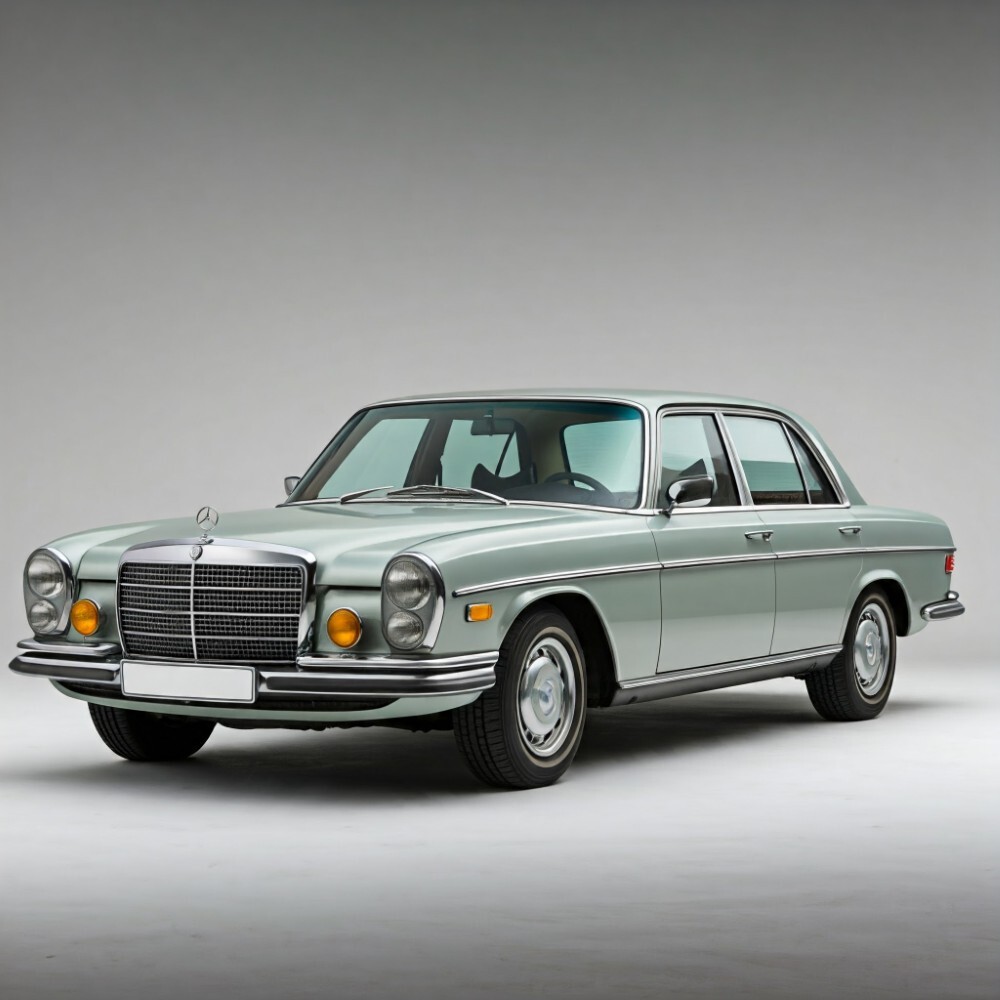
Looking back, it’s wild to think how much of our daily driving experience comes from Mercedes-Benz’s innovations decades ago. Airbags, ABS, ESC, crumple zones, and even those fancy self-closing doors—they all started with a brand that dared to think differently.
I still smile thinking about that day in my uncle’s garage, pretending I was a secret agent in his W140. Maybe one day I’ll get my own Mercedes-Benz, but until then, I’ll keep appreciating how these classic cars shaped the road for all of us.
If you’re as fascinated by car history as I am, I’d recommend taking a deep dive into Mercedes-Benz’s archives—or better yet, go for a ride in a classic model if you can find one.
There’s something magical about driving a piece of history, especially one that’s saved countless lives and made luxury feel like a hug from a robot butler.
As my uncle always said, “A good car doesn’t just get you from A to B—it tells a story.” And Mercedes-Benz? It’s got stories for days.