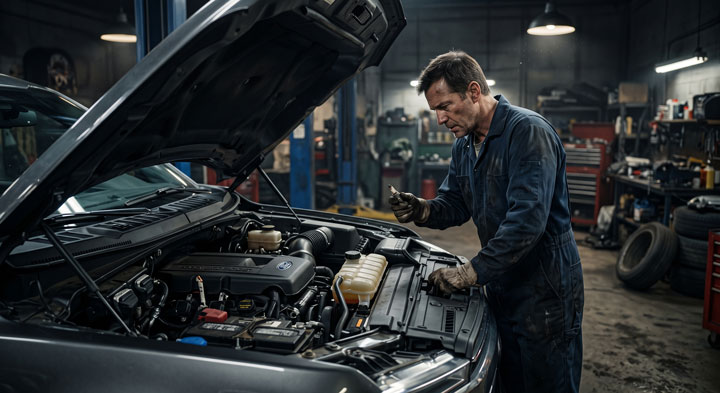
I still remember standing over the open engine bay of my Ford F150, holding a snapped spark plug shell and feeling sick to my stomach over potential cylinder head damage.
After spending hours researching factory service bulletins, I realized how critical exact ford f150 spark plug torque specs are for preventing blowouts, stripping, and rough engine hesitation.
Today at Team Bryan’s Garage, our master mechanics are sharing the exact torque values, gap dimensions, and money-saving maintenance secrets every truck owner needs.
Ford F150 Spark Plug Torque Specs and Valuations
In This Article
Step-by-step instructions for safely removing, gapping, and torquing F150 spark plugs.
Complete factory torque and gap tables for EcoBoost, V8 Coyote, and Triton engines.
How to diagnose OBD2 misfire codes and test ignition coils with a multimeter.
Real-world valuation analysis comparing DIY costs against expensive dealership service.
Pro mechanic tricks to eliminate thread stripping and dangerous spark plug blowouts.
🔴 MOST OWNERS NEVER FIND THIS
Your F-150 has a secret slot that starts the truck when your key fob dies. And 8 other things Ford never told you.
Dead fob fix · Remote window trick · 7.2 kW generator hiding in your bed · Tailgate ladder · and 5 more.
How to Replace and Torque Ford F150 Spark Plugs: Step-by-Step DIY Guide
Properly installing spark plugs in modern Ford trucks requires structured preparation, specialized hand tools, and strict adherence to tightening specifications.
Before beginning work, gather a calibrated 3/8-inch drive inch-pound or foot-pound torque wrench, a 5/8-inch or 9/16-inch spark plug socket with a rubber insert, compressed air, feeler gauges, and replacement Motorcraft plugs.
Always ensure the engine is completely cold to the touch before attempting spark plug removal from aluminum cylinder heads.
Ford F150 Spark Plug Torque Specs and Valuations
Step 1: Safely Disconnect Power and Prepare the Work Area.
Disconnect the negative terminal of your Ford F150 battery to isolate the electrical system before working near ignition components.
Remove any plastic engine appearance covers by loosening the retaining bolts or releasing the retaining clips.
Blow away dirt, grit, and debris from around the ignition coils using compressed air to prevent engine contamination.
Label each ignition coil electrical harness connector to ensure proper firing order during reassembly.
Step 2: Remove Ignition Coils and Inspect Cylinder Wells.
Depress the locking tab on the coil connector and pull the harness plug straight off the ignition coil.
Remove the single 8mm retaining bolt holding the coil-on-plug unit to the intake manifold or valve cover.
Gently twist and pull the ignition coil straight upward to break the vacuum seal on the spark plug tip.
Inspect the rubber coil boot for oil contamination, carbon tracking, cracks, or thermal degradation.
Step 3: Measure and Adjust Factory Spark Plug Gap.
Ford F150 Spark Plug Torque Specs and Valuations (Internet)
Unbox your new spark plugs and check the ground electrode spacing using a coin-style or wire feeler gauge.
Compare your measured gap reading directly against the factory engine specification table provided in this guide.
Adjust the gap carefully by gently bending the ground electrode using a dedicated spark plug gapping tool.
Never apply pressure or leverage directly against the delicate iridium or platinum center electrode tip.
Step 4: Thread New Plugs and Apply Correct Torque Specs.
Insert the spark plug into your dedicated socket and lower it straight down into the cylinder well.
Turn the extension bar by hand in a clockwise direction to start the threads smoothly without cross-threading.
Attach your calibrated torque wrench set strictly to the specified ft-lbs rating for your engine family.
Smoothly sweep the wrench handle until you feel or hear the distinct mechanical click of the torque mechanism.
Step 5: Reinstall Coils, Reconnect Battery, and Verify Operation.
Apply a thin layer of dielectric grease to the inside lip of the rubber ignition coil boot.
Press the ignition coil firmly onto the top terminal of the newly torqued spark plug until it seats.
Tighten the 8mm ignition coil retaining bolt to exactly 44 to 53 inch-pounds using a small torque wrench.
Reconnect the electrical connector, attach the battery negative cable, start the engine, and check for smooth idle quality.
Following this precise procedure eliminates common DIY errors and protects fragile aluminum head threads from costly damage.
For more detailed repair tutorials and maintenance tips tailored to your specific Ford truck year, visit Bryan’s Garage.
Comprehensive Ford F150 Spark Plug Torque Specs and Gap Specifications by Engine
Ford F150 Spark Plug Torque Specs and Valuations
Ford Motor Company has utilized several distinct engine architectures in the F150 lineup, each with unique cylinder head materials, thread depths, and clamp force requirements.
Applying accurate f150 spark plug torque specs guarantees that the spark plug shell creates a gas-tight seal against the taper or washer seat without stressing aluminum threads.
The comprehensive table below outlines the factory specifications for primary Ford F150 engine options spanning multiple production generations.
Engine Displacement & Type
Production Years
Factory Torque Spec (ft-lbs / Nm)
Factory Plug Gap Spec (Inches / mm)
2.7L EcoBoost V6
2015 – Present
11 ft-lbs (15 Nm)
0.028″ – 0.031″ (0.70 – 0.80 mm)
3.3L Duratec V6
2018 – Present
11 ft-lbs (15 Nm)
0.049″ – 0.053″ (1.25 – 1.35 mm)
3.5L Duratec V6 (Cyclone)
2015 – 2017
11 ft-lbs (15 Nm)
0.049″ – 0.053″ (1.25 – 1.35 mm)
3.5L EcoBoost V6 (Gen 1 & Gen 2)
2011 – Present
11 – 13.3 ft-lbs (15 – 18 Nm)
0.028″ – 0.031″ (0.70 – 0.80 mm)
3.7L Duratec V6
2011 – 2014
11 ft-lbs (15 Nm)
0.049″ – 0.053″ (1.25 – 1.35 mm)
4.6L Triton V8 (2-Valve)
1997 – 2003
25 – 28 ft-lbs (34 – 38 Nm)*
0.052″ – 0.056″ (1.30 – 1.40 mm)
4.6L Triton V8 (3-Valve)
2009 – 2010
25 – 28 ft-lbs (34 – 38 Nm)
0.039″ – 0.043″ (1.00 – 1.10 mm)
5.0L Coyote V8 (Gen 1, 2, 3, 4)
2011 – Present
11 – 13.3 ft-lbs (15 – 18 Nm)
0.049″ – 0.053″ (1.25 – 1.35 mm)
5.4L Triton V8 (2-Valve)
1997 – 2003
25 – 28 ft-lbs (34 – 38 Nm)*
0.052″ – 0.056″ (1.30 – 1.40 mm)
5.4L Triton V8 (3-Valve)
2004 – 2010
25 – 28 ft-lbs (34 – 38 Nm)
0.040″ – 0.045″ (1.00 – 1.15 mm)
6.2L Boss V8
2010 – 2014
11 – 13.3 ft-lbs (15 – 18 Nm)
0.041″ – 0.047″ (1.05 – 1.20 mm)
*Note: Early 2-Valve Triton engines originally carried a lower factory torque spec of 13-15 ft-lbs, but certified mechanics updated the official standard to 25-28 ft-lbs dry to permanently eliminate spark plug blowouts caused by insufficient thread engagement.
Modern EcoBoost twin-turbo engines generate high cylinder pressures that demand precise spark plug gap management.
When turbochargers force pressurized air into the combustion chamber, an excessive electrode gap can cause spark blowout, leading to severe engine stuttering under heavy load.
For tuned EcoBoost trucks running higher boost pressures, performance experts frequently tighten the plug gap down to 0.026 to 0.028 inches to ensure consistent flame ignition.
Conversely, naturally aspirated V8 engines like the 5.0L Coyote rely on wider electrode gaps around 0.051 inches to maximize air-fuel mixture exposure.
Understanding these subtle mechanical distinctions prevents performance degradation and keeps your engine running smoothly across all operating conditions.
Diagnosing Misfire Engine Codes and Testing Ignition Coils
Ford F150 Spark Plug Torque Specs and Valuations
When spark plug torque or electrode gap deviates from factory specifications, the engine computer quickly detects uneven crankshaft acceleration.
This anomaly triggers the check engine light and stores Diagnostic Trouble Codes (DTCs) inside the Powertrain Control Module (PCM).
Understanding how to interpret OBD2 misfire codes helps you trace the root cause directly to a specific cylinder.
Code P0300 indicates a random or multiple cylinder misfire, often caused by vacuum leaks, low fuel pressure, or widespread spark plug wear.
Codes ranging from P0301 through P0308 pinpoint a misfire occurring on a single cylinder corresponding directly to the last digit.
For instance, a P0304 code flags cylinder number 4, allowing you to focus your inspection on one isolated spark plug and coil assembly.
When inspecting a suspected cylinder, measure the electrical resistance of the ignition coil using a digital multimeter set to ohms.
Place multimeter probes across the primary terminal pins to check for primary coil resistance, which should read between 0.4 and 0.8 ohms on most modern Ford coils.
Next, measure secondary resistance between the primary pin and the high-voltage spring contact inside the rubber boot, expecting a reading between 5,500 and 10,000 ohms.
Any reading displaying open circuit infinity or zero resistance indicates a internal coil breakdown requiring immediate replacement.
Additionally, examine the rubber boot for tiny white or grey tracks, which signal carbon arcing where high-voltage current pierces through deteriorated rubber.
Replacing worn coil boots and applying fresh dielectric grease restores full electrical isolation and eliminates frustrating acceleration misfires.
🔧 Hidden F-150 Features — Confirmed by real owners
Ford F150 Spark Plug Replacement Costs and DIY Valuation Analysis
Maintaining a modern pickup truck requires balancing maintenance budgets against component quality and labor costs.
Understanding the exact market valuations for parts and shop labor empowers truck owners to make financially smart repair choices.
Performing a DIY spark plug service yields massive financial savings compared to traditional dealership repair estimates.
The cost breakdown table below compares standard service valuations across various repair channels.
Service Method
Average Parts Cost
Estimated Labor Cost
Total Estimated Cost
Potential DIY Savings
Ford Franchise Dealership
$120 – $220
$250 – $450
$370 – $670
Baseline Reference
Independent Repair Shop
$90 – $160
$180 – $320
$270 – $480
$100 – $190 Saved
DIY (Motorcraft Iridium Plugs)
$48 – $95
$0 (Self Labor)
$48 – $95
$322 – $575 Saved
DIY (Full Kit: Plugs + Boots + Coils)
$110 – $190
$0 (Self Labor)
$110 – $190
$260 – $480 Saved
Individual OEM Motorcraft iridium or double-platinum spark plugs typically retail between $7.50 and $14.00 per unit.
A complete set of six plugs for a 2.7L or 3.5L EcoBoost engine costs approximately $50 to $70 in raw materials.
An eight-cylinder 5.0L Coyote or 5.4L Triton requires eight plugs, bringing parts expenses to around $65 to $95.
Dealership labor rates frequently exceed $150 to $200 per hour, with standardized labor guides assigning 1.5 to 3.0 hours for plug replacement.
On older 5.4L 3-Valve Triton engines, dealerships often charge additional labor surcharges due to the high risk of breaking two-piece spark plugs in the head.
By investing approximately $30 in a quality torque wrench and performing the installation yourself, you retain hundreds of hard-earned dollars in your wallet.
This dramatic cost disparity makes spark plug replacement one of the highest-value DIY maintenance procedures available to Ford truck owners.
Practical Application Guide: Pro Mechanic Tips for Flawless Installation
Executing a flawless spark plug replacement involves master mechanic techniques that go beyond basic bolt tightening.
Always inspect the thread condition on newly removed spark plugs for signs of oil fouling, ash deposits, or fuel saturation.
Light tan or grey combustion deposits indicate healthy fuel-air mixture burning and proper heat range operation.
Heavy black soot signals excessive fuel richness or weak ignition power, while wet oil accumulation suggests worn valve stem seals or piston rings.
Before threading new plugs into place, verify that the aluminum cylinder head threads are entirely clean and free of metal burrs.
If you encounter resistance while threading a plug by hand, back it out immediately and inspect the threads with a flashlight.
Never force a tight spark plug with a socket wrench, as cross-threading an aluminum head creates catastrophic repair bills.
Use a piece of rubber fuel hose pushed over the plug insulator tail as a flexible hand tool for starting threads in deep cylinder wells.
If the plug meets thread resistance, the flexible rubber hose slips on the ceramic body before any thread damage can occur.
Additionally, double-check your torque wrench calibration setting before tightening each cylinder plug.
Working methodically cylinder by cylinder prevents accidental mixing of ignition coil harness connections and ensures uniform tightening across the entire cylinder head.
Overcoming Mechanical Risks: Avoiding Blowouts, Stripped Threads, and Broken Plugs
Ford F150 Spark Plug Torque Specs and Valuations
Improper installation torque remains the leading cause of premature engine failures and costly cylinder head repairs on Ford trucks.
Understanding historical engine vulnerabilities allows you to take proactive steps to prevent major mechanical breakdowns.
The early 1997 to 2003 4.6L and 5.4L 2-Valve Triton engines suffered from a notorious spark plug blowout defect.
These early aluminum heads featured only 4 to 5 threads holding the spark plug against intense combustion pressure.
When plugs were torqued to the low original factory setting of 14 ft-lbs, vibration caused threads to loosen over time.
Eventually, combustion gas bypassed the seat, destroying the remaining threads and ejecting the spark plug straight through the ignition coil.
Professional mechanics solved this widespread issue by increasing installation torque to 25-28 ft-lbs dry, providing sufficient clamping force to keep threads locked securely.
Another major challenge exists on 2004 to 2008 5.4L 3-Valve Triton engines equipped with long, two-piece ground sleeve spark plugs.
Carbon accumulation builds up around the lower extended sleeve in the cylinder head combustion chamber.
When removing these original plugs, carbon drag causes the lower metal sleeve to detach from the threaded shell, leaving the tip stuck deep in the head.
To prevent breakage, spray high-grade penetrating oil down the plug well and allow it to soak into the lower threads for at least 30 minutes before removal.
If a plug snaps during removal, specialized extraction tools like the Cal-Van or Lisle 65600 kit can extract the broken sleeve without removing the cylinder head.
For modern EcoBoost and Coyote engines, the primary risk is over-torquing fragile spark plugs in lightweight aluminum heads.
Excessive tightening stretches the hollow plug shell, distorts the delicate thread pitch, or cracks internal ceramic insulators.
A cracked porcelain insulator creates invisible electrical leakage pathways, resulting in persistent high-load misfires that confuse home mechanics.
Furthermore, the debate surrounding anti-seize lubricant requires careful mechanical evaluation.
Modern Motorcraft and NGK spark plugs feature special nickel or zinc plating designed specifically for dry thread installation.
Applying anti-seize lubricant reduces thread friction by up to 35 percent, leading to accidental over-tightening when using standard torque wrench settings.
If you choose to use anti-seize on dry-plated threads, reduce your applied target torque setting by 10 to 15 percent to compensate for lubrication factor.
🟢 Going viral on F150Forum & Reddit
“I’ve driven an F-150 for 4 years and didn’t know this existed.” — The most common reaction when this article is shared
9
features
2015+
models
11 min
read
Free
no signup
Did you know which button on your fob opens the tailgate when your hands are full? Or the button combo to reset CarPlay in 15 seconds without turning off the engine?
Frequently Asked Questions About F150 Spark Plug Maintenance
How often should I replace spark plugs in my Ford F150?
Ford service schedules recommend replacing spark plugs every 100,000 miles under normal driving conditions.
However, Team Bryan’s Garage strongly advises replacing EcoBoost spark plugs every 30,000 to 45,000 miles due to high turbo boost pressures and thermal stress.
Naturally aspirated 5.0L V8 engines perform reliably when plugs are replaced every 60,000 to 75,000 miles.
What happens if I under-torque or over-torque my spark plugs?
Under-torquing leaves the plug seat loose, allowing high-temperature combustion gas to leak past the threads and overheat the cylinder head.
Loosened plugs eventually vibrate free, stripping head threads and causing violent plug blowouts.
Over-torquing stretches the spark plug metal casing, warps internal gap dimensions, or strips soft aluminum threads out of the engine block.
Should I use anti-seize lubricant on Ford F150 spark plug threads?
Ford factory service manuals explicitly state that modern plated Motorcraft spark plugs should be installed with clean, completely dry threads.
Plated coatings prevent thread galling naturally without altering torque wrench force measurements.
If using anti-seize on unplated steel threads, lower your applied torque value by 10 to 15 percent to prevent severe thread over-stretching.
What is the recommended spark plug gap for a tuned EcoBoost F150?
Aftermarket performance tunes increase turbocharger boost levels, requiring a tighter electrode gap to prevent high-pressure spark blowout.
Tuned 2.7L and 3.5L EcoBoost engines should run a tight gap setting between 0.026 and 0.028 inches.
Stock EcoBoost trucks maintain smooth idling and optimal fuel efficiency with factory gap settings between 0.028 and 0.031 inches.
Do I need to replace ignition coils every time I change spark plugs?
Ignition coils do not require automatic replacement during routine spark plug maintenance unless diagnostic testing reveals electrical failure.
However, you should always replace the flexible rubber coil boots and internal contact springs when replacing spark plugs.
Fresh boot kits cost less than $20 and ensure maximum electrical isolation against high-voltage ground arc leaks.
Ford F150 Spark Plug Torque Specs and Valuations
Conclusion
Mastering correct ford f150 spark plug torque values protects your engine, optimizes fuel economy, and saves hundreds in mechanic fees.
Ready to transform your car maintenance from a stressful chore into a breeze? Explore more tips at Bryan’s Garage.
Have questions? Our team can help you find the best solutions for your car problems and avoid costly mechanic visits.
Note: Individual results may vary depending on individual vehicle makes, models, year of manufacture, and overall condition. This article is intended for general automotive reference purposes only and does not replace official manufacturer service manuals or advice from a certified mechanic.