Ford F150 Engine Oil Weights Coyote and EcoBoost Guide

I still remember the sinking feeling in my stomach when I almost poured the wrong oil viscosity into a customer’s high-performance truck because of confusing online forum advice regarding ford f150 engine oil weights.

As a master mechanic, I know that choosing between 5W-20, 5W-30, and 0W-20 isn’t just a minor detail—it dictates turbocharger longevity and timing chain life.

That experience led Team Bryan’s Garage to publish this ultimate factory guide so you can pick the exact oil weight, filter, and fluid capacity for your truck.
Ford F150 Engine Oil Weights Coyote and EcoBoost Guide

In This Article

  • Complete Oil Weight & Capacity Matrix: Exact factory recommended viscosity grades and oil volumes for 5.0L Coyote V8, 3.5L EcoBoost, and 2.7L EcoBoost engines.
  • Motorcraft Filter Part Numbers: Matching OEM oil filter part numbers to ensure proper anti-drainback valve protection.
  • Step-by-Step DIY Oil Change Guide: Comprehensive mechanics walkthrough for safely draining, filtering, refilling, and resetting the Intelligent Oil-Life Monitor.
  • Viscosity Science & Cost Analysis: Why modern variable displacement oil pumps require specific API SP standards, and how DIY oil changes save money over dealership service.
🔴 MOST OWNERS NEVER FIND THIS

Your F-150 has a secret slot that starts the truck when your key fob dies.
And 8 other things Ford never told you.

Dead fob fix · Remote window trick · 7.2 kW generator hiding in your bed · Tailgate ladder · and 5 more.

▶ Read Now — Show Me Everything

bryansgarage.com · Bryan Mark · 2026

Ford F-150 Hidden Features

How to Select and Change Ford F150 Engine Oil Weights: A Complete DIY Guide

Performing a routine motor oil change on your Ford F-150 is the single most effective maintenance task for extending engine lifespan.

Using correct motor oil viscosity ensures vital internal components like hydraulic cam phasers, main bearings, and turbocharger shafts stay lubricated.

Before crawling beneath your vehicle, you must gather the exact oil volume, correct filter specification, and basic hand tools.

Prerequisites and Tools You Will Need
Ford F150 Engine Oil Weights Coyote and EcoBoost Guide

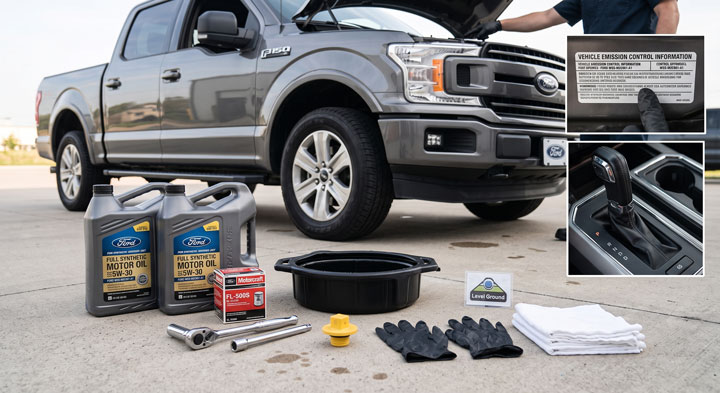
To execute a clean oil change, verify your specific engine displacement on your vehicle emission control information label under the hood.

You will need full synthetic or synthetic blend motor oil meeting Ford WSS specifications, an OEM Motorcraft oil filter, an oil drain pan, a 15mm socket wrench or yellow plastic drain plug tool, nitrile gloves, and clean rags.

Always perform oil changes on level ground with your transmission set in Park and the parking brake firmly engaged.

Allow the engine to sit turned off for fifteen minutes so hot oil drains back completely into the oil pan sumps.

  • Step 1: Verify Engine Displacement and Factory Oil Viscosity
    • Locate your owner manual or check the oil fill cap on top of your valve cover to confirm factory recommended oil viscosity.
    • Ford 3.5L EcoBoost and 2.7L EcoBoost engines strictly specify 5W-30 full synthetic or synthetic blend motor oil.
    • Ford 5.0L Coyote V8 engines specified 5W-20 motor oil from 2011 to 2020, but shifted to 5W-30 viscosity for 2021 and newer model years.
    • Cross-reference your engine model year with our comprehensive oil specification table below before buying motor oil jugs.
  • Step 2: Safely Elevate Vehicle and Position Drain Pan
    • Drive your F-150 onto heavy-duty wheel ramps or elevate the front frame rails using rated jack stands.
    • Never rely solely on a hydraulic floor jack while working beneath your truck bed or engine crossmembers.
    • Place a large 10-quart capacity drain pan directly underneath the oil pan drain plug or yellow plastic quarter-turn plug.
    • Remove the top oil filler cap from the engine valve cover to break crankcase vacuum and facilitate faster oil flow.
  • Step 3: Remove Drain Plug and Drain Engine Oil Completely
    • If your F-150 features a traditional steel oil pan, use a 15mm socket wrench to loosen the drain bolt counterclockwise.
    • If your truck features a yellow plastic molded oil pan plug, turn the plastic tab counterclockwise by hand or using a 3/8-inch drive extension.
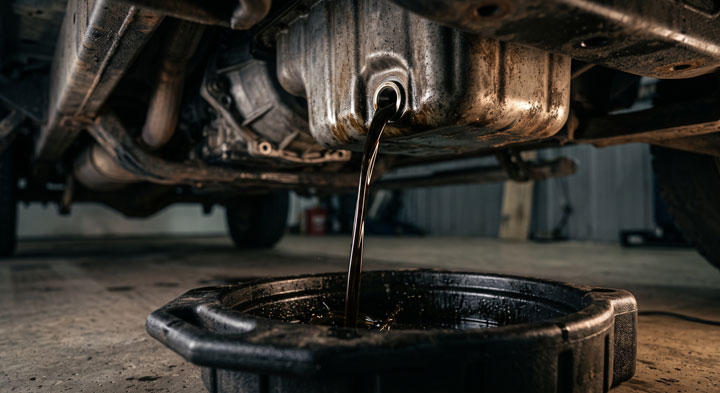
    • Be prepared for a rapid initial oil stream as the plug clears the oil pan drain port threads.
    • Allow the used engine oil to drain into your catch basin for at least ten minutes until dripping slows to a trickle.
    • Inspect the magnetic tip of traditional drain plugs or replace rubber O-ring seals on plastic yellow plugs before reinstallation.
    • Reinstall the drain plug and torque standard steel bolts to 19 foot-pounds, or lock plastic plugs into place hand-tight.
Ford F150 Engine Oil Weights Coyote and EcoBoost Guide
  • Step 4: Replace Motorcraft Oil Filter and Lubricate Rubber O-Ring
    • Locate the oil filter mounted on the driver side lower engine block or filter adapter housing.
    • Position your oil drain pan directly under the filter, as residual oil will spill out when breaking the rubber gasket seal.
    • Unscrew the old filter counterclockwise using an oil filter end-cap wrench or strap wrench if hand tension is too tight.
    • Wipe the engine block filter mounting surface clean using a fresh microfiber cloth to remove old rubber gasket debris.
    • Apply a thin layer of fresh engine oil around the rubber sealing O-ring of your new Motorcraft filter.
    • Screw the new filter on clockwise by hand until the gasket makes firm contact with the engine block mounting surface.
    • Tighten the filter an additional three-quarters of a turn by hand, avoiding excessive tool pressure that crushes filter housings.
  • Step 5: Refill Engine with Correct Oil Weight and Capacity
    • Insert a clean funnel into the valve cover oil filler neck on top of the engine block.
    • Pour in the exact required volume of engine oil based on your specific engine displacement and oil pan capacity.
    • For instance, a 3.5L EcoBoost requires exactly 6.0 quarts, while a 2018–2020 5.0L Coyote V8 requires 8.8 quarts of motor oil.
    • Reinstall the oil filler cap securely and wipe down any accidental oil spillage on the valve cover surface.
  • Step 6: Check Dipstick Level and Reset Intelligent Oil-Life Monitor
    • Start the engine and allow it to idle smoothly for two minutes while inspecting the drain plug and oil filter for leaks.
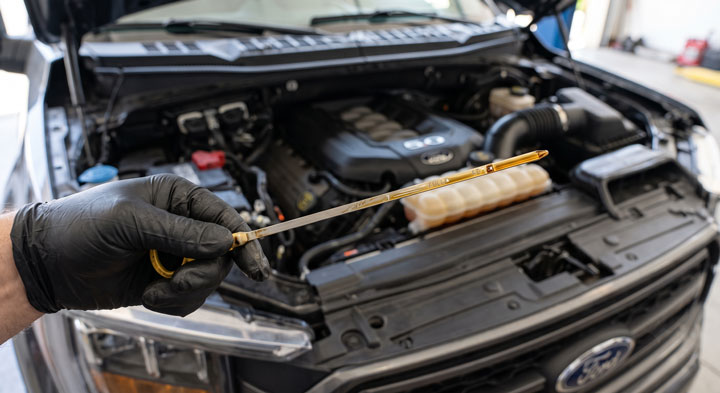
    • Turn off the ignition, wait five minutes for oil to settle, and pull the dipstick out to wipe it clean with a rag.
    • Reinsert the dipstick fully, pull it back out, and verify that the oil level rests comfortably between the upper crosshatch dots.
    • Turn your ignition key to the On position without starting the engine to access your dashboard driver productivity screen.
    • Navigate through Settings to Advanced Settings, select Vehicle, open Oil Life Reset, and hold the OK button until set to 100 percent.

For more detailed step-by-step repair walkthroughs and truck care guides, visit our resource center at Bryan’s Garage.

Complete Ford F150 Engine Oil Weights, Capacities, and Filter Specification Matrix

Selecting correct ford f150 engine oil weights requires matching your exact engine family, generation, and model year specs.

Ford updated oil volume capacities and viscosity recommendations across various model redesigns to meet evolving fuel efficiency standards.
Ford F150 Engine Oil Weights Coyote and EcoBoost Guide

The matrix below provides verified factory specifications for all modern F-150 powertrains.

Engine Model & GenerationFactory Recommended Oil Weight & CapacityMotorcraft OEM Oil Filter Part Number
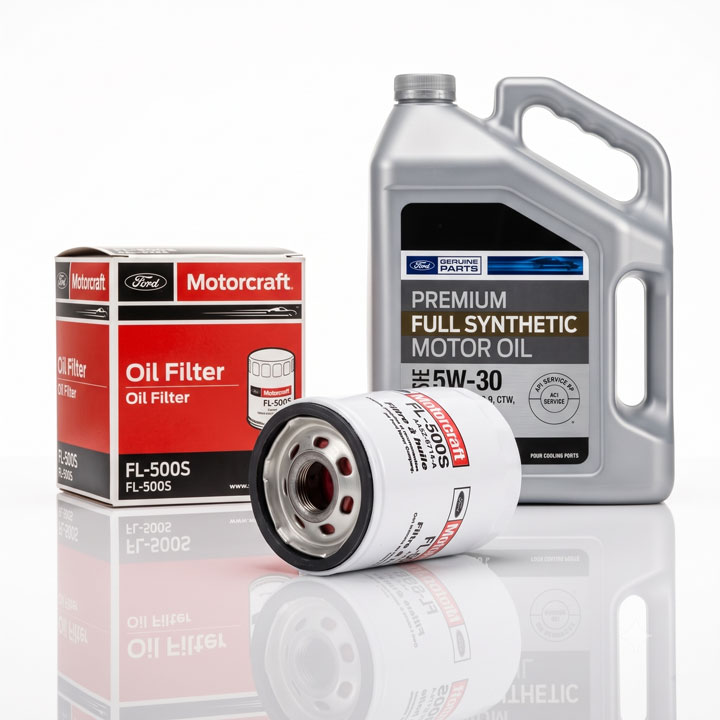
3.5L EcoBoost V6 (2011–2014)5W-30 Full Synthetic / Synthetic Blend (6.0 Quarts)Motorcraft FL-500S
3.5L EcoBoost V6 (2015–2020)5W-30 Full Synthetic / Synthetic Blend (6.0 Quarts)Motorcraft FL-500S
3.5L EcoBoost & PowerBoost (2021–Present)5W-30 Full Synthetic / GF-6A (6.0 Quarts)Motorcraft FL-500S
2.7L Nano EcoBoost V6 (2015–2017)5W-30 Full Synthetic / Synthetic Blend (6.0 Quarts)Motorcraft FL-2062 (Cartridge)
2.7L Nano EcoBoost V6 (2018–Present)5W-30 Full Synthetic / Synthetic Blend (6.0 Quarts)Motorcraft FL-2062-A (Cartridge)
5.0L Coyote V8 (2011–2014)5W-20 Synthetic Blend / Full Synthetic (7.7 Quarts)Motorcraft FL-500S
5.0L Coyote V8 (2015–2017)5W-20 Synthetic Blend / Full Synthetic (7.7 Quarts)Motorcraft FL-500S
5.0L Coyote V8 (2018–2020)5W-20 Synthetic Blend / Full Synthetic (8.8 Quarts)Motorcraft FL-500S
5.0L Coyote V8 (2021–Present)5W-30 Full Synthetic / Synthetic Blend (7.75 Quarts)Motorcraft FL-500S
3.3L Duratec V6 (2018–2023)5W-20 Synthetic Blend / Full Synthetic (6.0 Quarts)Motorcraft FL-500S
3.0L PowerStroke Turbo Diesel (2018–2021)5W-30 FA-4 / CK-4 Diesel Synthetic (6.5 Quarts)Motorcraft FL-2038 (Cartridge)
6.2L Boss V8 (2010–2014)5W-20 Synthetic Blend / Full Synthetic (7.0 Quarts)Motorcraft FL-820S
5.4L 3V Triton V8 (2004–2010)5W-20 Synthetic Blend / Full Synthetic (7.0 Quarts)Motorcraft FL-820S

Double checking these fluid capacities prevents catastrophic overfilling or fluid starvation during extended highway driving.

Using genuine Motorcraft filters is vital because they feature internal silicone anti-drainback valves that retain oil pressure in upper valvetrain components upon startup.
🔧 Hidden F-150 Features — Confirmed by real owners

9 things your F-150 can do — that the dealer never tells you

  • ① The secret slot to start your truck when the fob dies — you’re ignoring it every day
  • ② Hold Unlock for 3 seconds: windows roll down, cabin cools before you step in
  • ③ Pro Power Onboard: 7.2 kW outlet right in your bed — never used it?
  • ④ Hidden tailgate ladder + built-in ruler on the workbench
  • ⑤ Auto shifts to P when you open the door — saved thousands of trucks from rolling away
  • ⑥ + 4 more features the service department never mentions →

See full list with photos →

F-150 Tricks

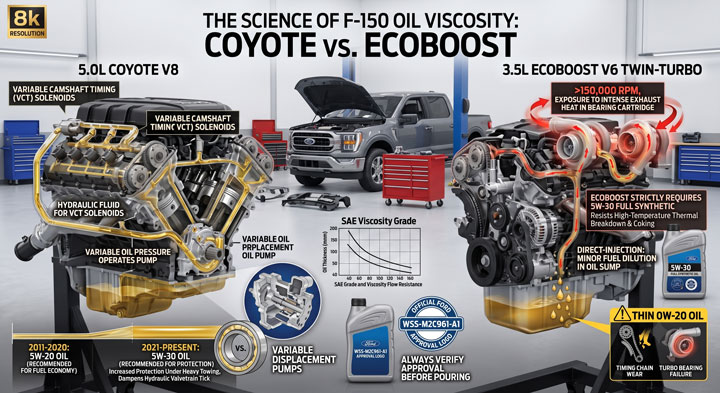
The Science of Oil Viscosity: Why Coyote V8s and EcoBoost Turbos Require Specific Oils

Engine oil viscosity measures fluid resistance to flow across varying operating temperature thresholds.

In modern Ford engines, oil serves as both a physical lubricant and a hydraulic fluid for variable camshaft timing solenoids.

Understanding the proper f150 oil weight coyote engines demand involves examining how oil pressure operates variable displacement pumps.

Ford F150 Engine Oil Weights Coyote and EcoBoost Guide

From 2011 through 2020, Ford recommended 5W-20 oil for 5.0L Coyote V8 engines to maximize fuel economy compliance.

However, beginning in 2021, Ford transitioned the 5.0L Coyote specification to 5W-30 viscosity weight worldwide.

This viscosity increase provides thicker protective oil films under heavy towing loads while dampening hydraulic valvetrain tick.

Conversely, evaluating the correct ecoboost oil weight f150 twin-turbo engines require revolves around managing extreme thermal stress.

Twin turbochargers spin at speeds exceeding 150,000 RPM, exposing engine oil to intense exhaust heat within center bearing cartridges.

5W-30 full synthetic oils meeting API SP and ILSAC GF-6A specifications resist high-temperature thermal breakdown and coking.

Furthermore, direct-injection gasoline engines spray fuel under high pressure directly into combustion chambers, causing minor fuel dilution in the oil sump over time.

A high-quality 5W-30 synthetic oil maintains its High-Temperature High-Shear viscosity even when slight fuel dilution occurs.

Using thinner 0W-20 or non-approved low-viscosity oils in an EcoBoost engine accelerates timing chain wear and turbo bearing failure.

Always verify that your oil bottle displays the official Ford WSS-M2C961-A1 approval logo prior to pouring.

DIY vs Professional F-150 Oil Change Cost Analysis and Interval Strategy

Deciding between performing oil changes yourself or paying a commercial auto shop comes down to cost and quality control.

A professional dealership oil change service for a Ford F-150 typically costs between $90 and $160 depending on oil volume.

In contrast, purchasing six to eight quarts of name-brand full synthetic motor oil and a Motorcraft filter costs roughly $35 to $55 at auto parts stores.

Handling oil maintenance in your home driveway yields substantial long-term savings over a 100,000-mile vehicle ownership period.

Additionally, performing your own oil changes allows you to inspect undercarriage components, CV axle boots, and brake lines firsthand.

While Ford’s Intelligent Oil-Life Monitor permits service intervals up to 10,000 miles under ideal driving conditions, master mechanics recommend shorter intervals.

Based on feedback from over 18,587+ car owners, changing EcoBoost oil every 5,000 miles prevents severe timing chain stretch.

For 5.0L Coyote V8 engines subjected to regular heavy towing, a strict 5,000 to 6,000-mile oil change interval maximizes bearing life.

Investing minor time into frequent oil services represents cheap insurance against multi-thousand dollar engine overhaul bills.

Practical Inspection and Maintenance Protocol for High-Mileage F-150 Engines

As your Ford F-150 accumulates high mileage beyond 100,000 miles, internal engine clearances naturally increase slightly.

Implementing a routine fluid monitoring protocol prevents minor oil consumption from turning into major mechanical failures.

1. Weekly Dipstick Level Inspections

Check your dipstick fluid level every two gas fill-ups while standing on level ground with the engine cold.

High-mileage Coyote V8s and direct-injected EcoBoost engines can consume up to one quart of oil every 3,000 miles under heavy load.

Top off low oil levels immediately using the exact same oil weight and brand currently running in your crankcase.

Ford F150 Engine Oil Weights Coyote and EcoBoost Guide

2. Inspecting Oil Catch Can Accumulation

If you installed an aftermarket oil catch can on your EcoBoost intake tract, empty the reservoir every 1,000 miles.

Catch cans trap oily blow-by vapors before they coat intake valves, preserving intake valve cleanliness and combustion efficiency.

Dispose of collected blow-by fluid alongside used motor oil at local automotive recycling centers.

3. Sending Periodic Samples for Oil Analysis

Consider sending a used engine oil sample to an accredited fluid testing laboratory once per year.

Laboratory spectrographic analysis detects microscopic copper, aluminum, and iron wear metals long before abnormal engine noises appear.

Oil analysis reports also detect hidden coolant leaks from blown head gaskets or internal turbocharger seals.

Critical Oil Change Errors That Lead to Cam Phaser Noise and Engine Wear

Ford F150 Engine Oil Weights Coyote and EcoBoost Guide

Skipping simple maintenance steps or using improper tools can introduce costly mechanical problems into your F-150 engine.

Understanding common DIY pitfalls ensures your vehicle remains reliable and whisper-quiet on every drive.

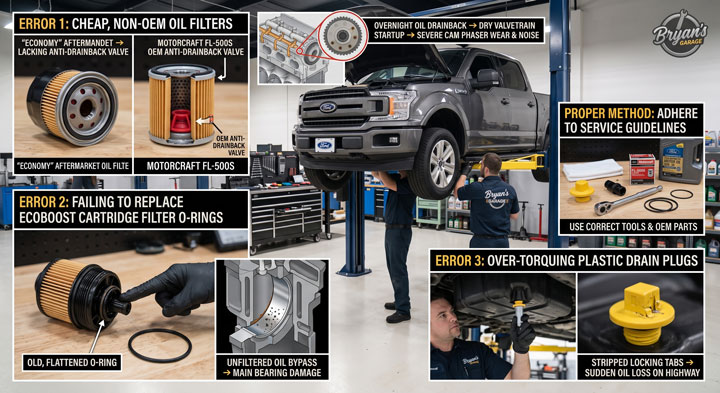
One major error is using cheap, low-quality aftermarket oil filters lacking an internal anti-drainback valve.

When an F-150 sits overnight with an inferior filter, engine oil drains completely out of the upper cylinder head passages.

Upon morning start-up, dry valvetrain components clatter for several seconds until oil pressure builds, causing severe cam phaser wear.

Another frequent mistake on 2.7L EcoBoost engines is failing to replace the small rubber O-rings on the cartridge filter stem.

Reusing old, flattened stem O-rings allows unfiltered oil to bypass the filter element entirely, circulating debris through main bearings.

Additionally, over-torquing plastic molded oil pan drain plugs strips locking tabs, resulting in sudden oil loss on highways.

Always turn plastic yellow drain plugs by hand until locking tabs seat firmly against outer stop notches.

By avoiding these common mistakes and adhering to Bryan’s Garage service guidelines, your truck will deliver smooth, dependable performance for miles ahead.

F-150 Community
🟢 Going viral on F150Forum & Reddit

“I’ve driven an F-150 for 4 years and didn’t know this existed.”
— The most common reaction when this article is shared

9
features
2015+
models
11 min
read
Free
no signup

Did you know which button on your fob opens the tailgate when your hands are full? Or the button combo to reset CarPlay in 15 seconds without turning off the engine?

I want to know right now →

bryansgarage.com · June 24, 2026

Frequently Asked Questions About Ford F150 Engine Oil Weights

Can I use 5W-30 oil instead of 5W-20 in my 2011–2020 5.0L Coyote V8?

Yes, many master mechanics recommend running 5W-30 full synthetic oil in older 5.0L Coyote engines, especially during hot summer months.

Ford formally updated the factory specification for the 5.0L Coyote to 5W-30 starting in model year 2021.

What is the recommended ecoboost oil weight f150 trucks require?

All 2.7L and 3.5L EcoBoost engines strictly require 5W-30 viscosity motor oil meeting Ford WSS-M2C961-A1 or WSS-M2C946-B1 specifications.

Using 5W-30 synthetic oil provides essential high-temperature film strength needed to protect turbocharger bearings from thermal breakdown.

How much engine oil does a 3.5L EcoBoost V6 take?

The 3.5L EcoBoost V6 engine requires exactly 6.0 quarts of motor oil including oil filter replacement across all model years.

Always verify fluid level on the dipstick after running the engine to confirm accurate fill levels.

Why did Ford update the f150 oil weight coyote engines use in 2021?

Ford updated the 5.0L Coyote specification to 5W-30 to enhance valvetrain lubrication, reduce hydraulic phaser chatter, and improve high-load film protection.

The thicker oil film provides superior protection without sacrificing fuel economy performance in modern engine designs.

How often should I change engine oil on a twin-turbo EcoBoost F-150?

We recommend changing motor oil and replacing the Motorcraft filter every 5,000 miles or six months on all EcoBoost engines.

Frequent oil changes prevent fuel dilution degradation and keep timing chain assemblies running smoothly for years.

Conclusion

Choosing the correct Ford F-150 engine oil weight protects turbochargers, maintains hydraulic cam phasers, and saves money on costly mechanic repairs.

Ready to transform your car maintenance from a stressful chore into a breeze? Explore more tips at Bryan’s Garage.

Have questions? Our team can help you find the best solutions for your car problems!

Note: Individual results may vary depending on individual vehicle makes, models, year of manufacture, and overall condition. This article is intended for general automotive reference purposes only and does not replace official manufacturer service manuals or advice from a certified mechanic.

Leave a Comment