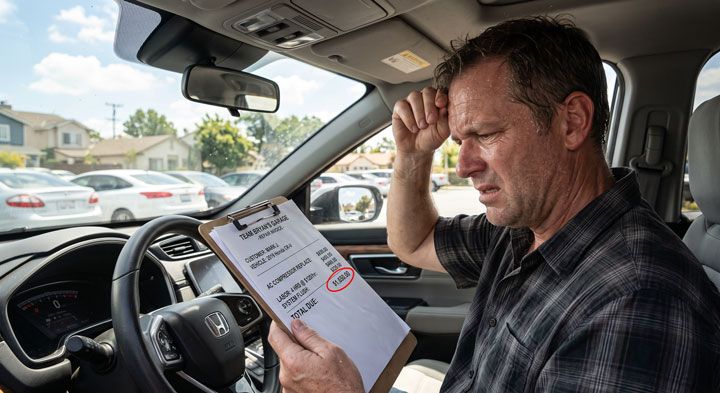
I still remember sweating through my shirt on a ninety-degree afternoon when the air conditioning in my trusty Honda CR-V suddenly blew scorching cabin air.
Staring down a massive mechanic estimate can make any car owner feel completely overwhelmed and anxious about unfair shop markups.
At Team Bryan’s Garage, we want to empower you with exact pricing data, clear repair options, and verified mechanical advice so you can navigate your honda crv ac compressor replacement cost standard expectations with absolute confidence.
Honda CRV AC Compressor Replacement Cost Standard Repair Prices
In This Article
Dealership vs. Independent Shop Price Comparison: National standards for parts, labor, and total repair quotes.
CR-V Generation Breakdown: How costs fluctuate across 2nd, 3rd, 4th, 5th, and 6th generation models.
Diagnosing Failure Types: Differentiating between simple clutch failure and catastrophic “Black Death” contamination.
Smart Savings Strategies: Evaluating OEM vs. aftermarket parts and calculating potential DIY savings.
Actionable Diagnostic Steps: How to inspect your AC system before visiting a repair shop.
🔴 MOST OWNERS NEVER FIND THIS
Your CR-V has a secret trick that starts the SUV when your key fob dies. And 14 other things Honda never told you.
Dead fob fix · Global window down trick · The hidden folding picnic table · Walk Away Auto Lock · and 11 more.
The average honda crv ac compressor labor cost at an independent shop averages between $350 and $650.
Dealership labor for the exact same job easily reaches $700 to $1,200 due to higher facility overhead costs.
Most professional facilities charge an initial diagnostic fee ranging from $100 to $180.
Reputable repair shops usually apply this diagnostic fee directly toward your repair total if you choose to let them complete the work.
OEM Compressor Units vs. High-Quality Aftermarket Parts
Honda CRV AC Compressor Replacement Cost Standard Repair Prices
The overall honda crv ac compressor repair price depends heavily on component selection.
Factory original Honda AC compressors are engineered to strict specifications but command high retail prices.
If you ask how much is an ac compressor for honda crv at a dealership parts counter, expect quotes between $650 and $1,100.
High-quality aftermarket brands such as Denso, Four Seasons, or Valeo provide identical cooling efficiency for $250 to $500.
Denso manufactures the actual original compressors for many Honda models, making their aftermarket line an exceptional value.
Choosing a reputable aftermarket compressor can instantly save you hundreds of dollars without sacrificing durability.
Single Compressor Swap vs. Full System Flush and Component Replacement
Honda CRV AC Compressor Replacement Cost Standard Repair Prices
Replacing only the failed compressor is sufficient if the internal pump did not disintegrate.
However, when a compressor suffers internal mechanical destruction, metallic debris circulates through the entire cooling loop.
Mechanics call this destructive failure mode “Black Death”.
Clearing contaminated lines requires replacing the AC condenser, receiver-drier, and thermal expansion valve along with flushing the lines.
A simple compressor replacement costs around $850 to $1,400.
A comprehensive system overhaul costs between $1,800 and $3,500 due to additional components and intensive labor.
Our experienced mechanics at Bryan’s Garage recommend requesting a visual inspection of your old compressor oil to confirm whether a full system replacement is truly necessary.
Understanding Honda CR-V AC Compressor Costs Across Generations (2002–2026)
Honda CRV AC Compressor Replacement Cost Standard Repair Prices
The Honda CR-V has evolved across six distinct vehicle generations, each featuring unique air conditioning designs.
Component accessibility, system capacity, and refrigerant types dictate how prices vary across model years.
Reviewing detailed honda crv specs helps identify your engine configuration and corresponding part requirements.
Second Generation (2002–2006 Model Years)
Second-generation CR-Vs equipped with the 2.4-liter K24 engine are notorious for premature compressor clutch and pump failures.
These older models utilize traditional R-134a refrigerant, which keeps servicing fees relatively low.
An independent mechanic usually charges between $650 and $1,200 for a standard replacement on these models.
If internal contamination occurs, replacing the complete AC kit runs between $1,400 and $2,000.
Many owners opt for a used honda crv ac compressor replacement cost approach on aging vehicles, spending under $400 for parts and basic installation.
Third Generation (2007–2011 Model Years)
Third-generation models featured upgraded system routing but retained similar labor accessibility.
The average compressor cost honda crv drivers pay for 2007–2011 models sits right around $950 to $1,450.
Labor times range from 3.2 to 4.0 hours because the compressor sits on the lower front section of the engine block.
Replacing the serpentine belt during this service is highly recommended because it must be removed anyway.
Adding a new serpentine belt incurs only a minor part cost of $30 to $50 without extra labor charges.
Fourth Generation (2012–2016 Model Years)
Fourth-generation CR-Vs featured minor body changes but preserved the reliable 2.4-liter powertrain layout.
Average repair bills at independent repair facilities range from $1,050 to $1,650.
Dealer estimates for 2012–2016 models frequently top $2,300 to $3,800 when full system flushes are included.
The thermal expansion valve on these models is located behind the dashboard, increasing labor difficulty if metal debris spreads.
Inspecting system pressure early prevents costly repairs down the road.
Fifth Generation (2017–2022 Model Years)
Fifth-generation CR-Vs introduced 1.5-liter turbocharged engines alongside the modern R-1234yf refrigerant.
R-1234yf is an environmentally friendly gas, but its raw material cost is significantly higher than older R-134a.
A simple refrigerant evacuate-and-recharge procedure alone can cost between $250 and $450.
Total compressor replacement costs for fifth-generation vehicles generally land between $1,350 and $2,400.
Many of these vehicles also experienced leaks at the front condenser coil, leading Honda to issue extended protection campaigns.
The Hidden Mechanical Culprits: Clutch Failure vs. “Black Death” Contamination
Before writing a large check for a full compressor replacement, you must understand how these units break down.
Not all AC failures require changing the entire pump body.
Identifying the root cause saves thousands of dollars in unnecessary labor.
Understanding AC Compressor Clutch Slippage and Burnout
The AC compressor clutch assembly uses an electromagnetic coil, a clutch plate, and a pulley mechanism.
When you press the AC button inside your cabin, electric current energizes the coil to engage the compressor pump.
Over time, the friction plate wears down, increasing the air gap between the plate and pulley.
Excessive clearance prevents the clutch from locking, causing it to slip, overheat, or stay disengaged.
If your climate control blows warm air but the compressor body remains intact, you may only have a honda crv ac compressor clutch stuck situation.
Replacing just the clutch kit and stator coil costs between $250 and $450, saving you over 60% compared to a full compressor swap.
Recognizing Early Warning Signs of System Failure
Compressors rarely fail without giving subtle warning signs beforehand.
Paying attention to unusual vehicle behavior helps you address mechanical issues before total pump seizure occurs.
Unusual growling, grinding, or squeal noises coming from the engine bay when activating climate controls indicate worn internal bearings.
If you notice a sudden grinding sound under the hood, read our guide on honda crv ac compressor noise to pinpoint internal bearing wear early.
Audible rattles often mean internal swash plates or pistons are wearing down and shedding micro-metallic particles.
Catching these warning signs early allows you to replace the compressor before catastrophic debris ruins your condenser.
Navigating Factory Recalls and Special Service Bulletins
Honda has published multiple Technical Service Bulletins (TSBs) addressing AC performance issues across various model years.
Certain years suffered from defective clutch relays that stuck in the ON position, draining batteries and cooking compressor coils.
Replacing a simple $15 electrical relay can quickly solve cooling issues and prevent premature compressor failure.
Check official manufacturer databases to see if your vehicle has an open honda crv ac compressor recall or active warranty bulletin.
Taking advantage of manufacturer coverage ensures you do not pay for repairs covered under factory service programs.
Step-by-Step Guide: How to Safely Evaluate and Prepare for Your CR-V AC Repair
Proper preparation helps you secure accurate estimates and avoid unnecessary repair charges.
Follow this systematic evaluation procedure before scheduling service with an automotive shop.
1. Confirm Compressor Engagement and Belt Condition
Honda CRV AC Compressor Replacement Cost Standard Repair Prices
Start your CR-V, turn on the engine, and activate the air conditioning to its lowest temperature setting.
Open the hood and inspect the front lower passenger side of the engine bay with a flashlight.
Observe whether the center hub of the AC compressor pulley is spinning smoothly or standing still.
If the outer pulley spins with the belt but the inner clutch center remains motionless, your system has an electrical or clearance issue.
Inspect the serpentine belt for signs of cracking, fraying, or glazing.
2. Scan for Stored Diagnostic Trouble Codes
Modern Honda CR-Vs use electronic sensors to monitor HVAC system pressures and engine operating loads.
Connect an OBD2 diagnostic scanner to the port located beneath the driver-side dashboard.
Scan for active fault codes or pending climate control parameters.
Reviewing stored honda crv check engine codes reveals if low refrigerant pressure switches or faulty relays are disabling the system.
Addressing an electrical switch issue costs significantly less than buying a new compressor.
3. Perform a Static Pressure and Leak Check
Honda CRV AC Compressor Replacement Cost Standard Repair Prices
Connect a manifold gauge set to the high-side and low-side service ports under the hood.
Check static system pressures with the engine turned off.
Static pressures below 50 PSI suggest a refrigerant leak elsewhere in the system rather than a mechanical compressor failure.
Use a UV leak detection light to check the condenser, hoses, and compressor shaft seal for glowing green dye traces.
Fixing an oily O-ring seal costs far less than replacing a working compressor.
4. Collect Multiple Written Itemized Estimates
Contact at least three local repair shops to request comprehensive written estimates.
Ensure each quote breaks down costs into parts, labor, refrigerant evacuation, vacuum testing, and final recharge fees.
Confirm whether the shop intends to replace the receiver-drier and thermal expansion valve alongside the compressor.
Ask specifically what brand of replacement compressor they plan to install in your vehicle.
Itemized estimates allow you to compare prices accurately across repair facilities.
5. Prepare Your Vehicle and Schedule Service
Clear out the front passenger compartment and trunk area so mechanics can access internal service ports easily.
Inform the service manager of your diagnostic findings, including any unusual noises or leak locations.
Confirm the shop’s warranty terms in writing before authorizing work.
Reputable repair facilities standardly offer a 12-month or 12,000-mile warranty on climate control work.
Proper record-keeping preserves your warranty protection and maintains your vehicle’s resale value.
Our team at Bryan’s Garage provides detailed repair guides to keep your vehicle running smoothly without overpaying for routine maintenance.
Critical Risks and Costly Mistakes to Avoid During AC Compressor Service
Honda CRV AC Compressor Replacement Cost Standard Repair Prices
Attempting air conditioning repairs without adequate knowledge can lead to costly mistakes and safety hazards.
Avoid these common pitfalls to protect both your wallet and your vehicle.
Never Vent Refrigerant into the Atmosphere
Refrigerants like R-134a and R-1234yf are hazardous chemical compounds regulated by federal environmental law.
Venting refrigerant directly into the air is illegal and dangerous.
Professional shops use specialized recovery machines to capture, clean, and store refrigerant safely.
Always have a certified technician recover residual gas before opening any AC line at home.
Safe chemical handling prevents toxic exposure and avoids severe regulatory fines.
Avoid Installing Ultra-Cheap Unbranded Remanufactured Parts
Bargain AC compressors found on unverified online marketplaces often suffer from poor assembly quality and cheap seals.
Installing a sub-par compressor risks sudden seal failure or internal lockup within months.
If a cheap compressor fails internally, it dumps metal shavings into your freshly flushed cooling system.
Remanufactured parts from trusted brands like Denso or Four Seasons undergo strict testing to ensure long-term durability.
Investing in proven components saves money by preventing premature repeat repairs.
Do Not Skip Replacing the Receiver-Drier and Expansion Valve
Whenever an AC system is opened for major repairs, atmospheric moisture enters the lines.
The receiver-drier contains desiccant material designed to absorb residual moisture from circulating refrigerant.
Leaving an old receiver-drier in place allows moisture to react with refrigerant oil, forming corrosive acids.
Corrosive acid degrades new rubber seals and corrodes internal metallic surfaces over time.
Replacing the receiver-drier and expansion valve adds only $40 to $90 in parts but protects your new compressor.
Always Perform a Deep Vacuum Pull Before Recharging
Simply pumping new refrigerant into an open system traps air and moisture inside the lines.
Trapped air raises system operating pressures, reducing cooling performance and straining the compressor pump.
A professional service includes pulling a deep vacuum (at least 29 to 30 inches of Mercury) for a minimum of 45 minutes.
Vacuum evacuation boils off internal moisture and verifies system airtightness before adding fresh gas.
Skipping this step causes poor cooling efficiency and shortens compressor lifespan.
🟢 Going viral on CR-V Owners Club & Reddit
“I’ve driven a CR-V for 4 years and didn’t know this existed.” — The most common reaction when this article is shared
15
features
1997+
models
15 min
read
Free
no signup
Did you know your backup camera has a hidden top-down ‘drone view’? Or that your cruise control automatically downshifts on steep mountain hills to save your brakes?
Have questions? Our team can help you find the best solutions for your car problems and avoid costly mechanic visits.
Note: Individual results may vary depending on individual vehicle makes, models, year of manufacture, and overall condition. This article is intended for general automotive reference purposes only and does not replace official manufacturer service manuals or advice from a certified mechanic.`