
Imagine this: a quiet drive on a sunny afternoon, your hands gripping a steering wheel that smells faintly of fresh moss, your lungs filling with the cleanest air you’ve ever breathed inside a vehicle.
It sounds like a scene from a futuristic eco-utopia, but this is reality—a car with an interior entirely crafted from living plants and moss.
This isn’t just about aesthetics or an eco-conscious gimmick. It’s about reimagining the relationship between cars, humans, and the planet.
For men in their prime years, balancing work, family, and health, this could be the game-changer we didn’t know we needed.
The Vision Behind the Green Interior Car
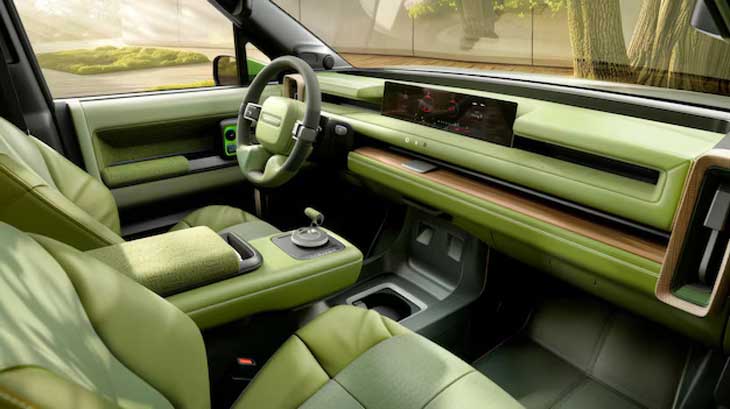
The concept of an all-green car interior didn’t spring from a boardroom filled with corporate suits.
It came from a simple but profound question: Why do cars, the pinnacle of modern mobility, still make us feel disconnected from nature?
The idea started small, with designers and engineers looking at how moss thrives in controlled environments.
They thought, What if we brought this to the one place we spend hours of our lives daily—our cars? The goal wasn’t just to make cars prettier but to make them alive.
For men juggling hectic schedules, this car represents more than just a commute. It’s a chance to breathe, reset, and step into a sanctuary—without ever leaving the road.
Breaking Down the Design
1. Choice of Materials
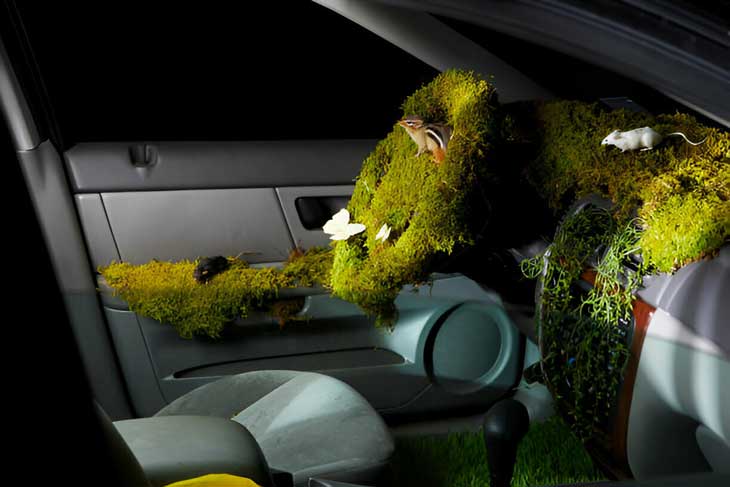
The designers didn’t just grab any random greenery from a park. They used specific varieties of moss and hardy plants known for their resilience and air-purifying qualities.
Think of it as nature’s toughest soldiers—capable of thriving even in the challenging environment of a car interior.
These materials are low-maintenance by design. They don’t require daily watering or gardening skills. Instead, they’re supported by a built-in irrigation system that keeps them lush with minimal effort.
2. Engineering Marvel
Here’s where it gets truly fascinating. Fitting living plants into a car wasn’t just about slapping on a few patches of green.
Engineers worked overtime to design integrated lighting systems mimicking natural sunlight, ensuring these plants thrive year-round, even in the darkest winter commutes.
The irrigation system operates quietly, delivering water in a precise manner, so you don’t end up with soggy carpets.
It’s sustainable engineering at its finest—everything works seamlessly without interrupting your drive.
3. Aesthetic Appeal
Forget leather or carbon fiber trims. Imagine opening your car door to an interior that feels like stepping into a Japanese zen garden.
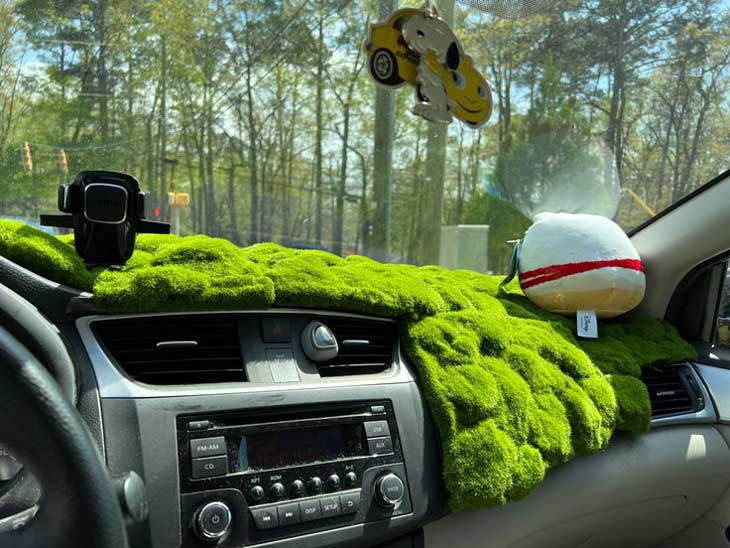
The textures, colors, and smells create a tranquil yet modern aesthetic. Customization options abound—choose moss for the dashboard or a full vertical garden on the backseat panels.
The design isn’t just a statement; it’s a conversation starter. And let’s face it—who wouldn’t want their friends to ask, “Wait, is that real moss in your car?”
The Benefits of a Green Interior
1. Health Advantages
You already know the health perks of spending time in nature—reduced stress, improved focus, and better respiratory health.
Now, imagine bringing all of that into your car. These green interiors filter out toxins, regulate humidity, and create a cleaner cabin environment.
For men who spend long hours commuting or driving for work, this isn’t just a nice-to-have; it’s an upgrade for your well-being.
2. Environmental Impact
Traditional car interiors rely on plastics, synthetic fabrics, and toxic glues. An all-green interior flips that script, using renewable and biodegradable materials.
It’s not just about reducing harm—it’s about creating a net positive impact on the planet.
Your car becomes more than transportation; it’s a tiny carbon sink. Yes, the same moss that decorates your dashboard is quietly absorbing CO2 as you drive.
3. Cost Savings
You’d think this level of luxury comes with astronomical upkeep costs, but you’d be wrong.
These materials are surprisingly durable, reducing the need for replacements over time.
Maintenance involves little more than checking the irrigation system and giving your moss a gentle wipe now and then.
And let’s not forget—the timeless appeal of nature never goes out of style, unlike trends in synthetic interiors.
Real-Life User Experiences
A Father’s New Weekend Ritual
Take Alex, a 42-year-old father of two. Weekend drives used to be stressful, with noisy kids and stale air.
But ever since upgrading to this car, it’s become a bonding experience. His kids love the “mini forest” inside, and Alex finds himself taking the scenic route just to enjoy the ride longer.
A Professional’s Secret to Stress-Free Commutes
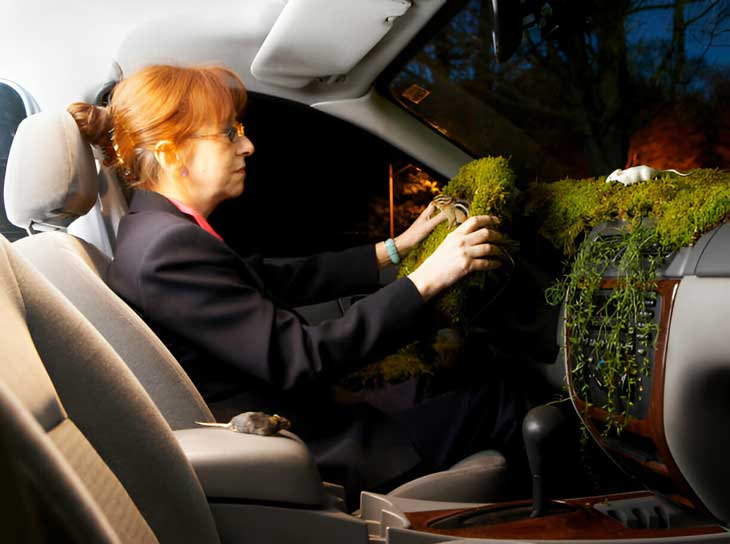
Then there’s Jason, a mid-level executive who spends an hour driving to and from work every day. He used to dread rush hour.
Now, he looks forward to it. “It’s like having a piece of the forest with me,” he says. “Even when the traffic’s bad, I feel calm.”
These aren’t just testimonials—they’re proof that a car can transform more than your journey. It can transform your mindset.
Challenges and Future Innovations
1. Overcoming Initial Skepticism
Let’s be honest—this idea sounded crazy at first. Concerns about durability, hygiene, and practicality were valid.
But with years of R&D, every major hurdle has been addressed. These interiors are built to last and are as easy to maintain as a regular car.
2. Scaling the Concept
Right now, these green interiors are a premium feature. But like all great innovations, it’s only a matter of time before the technology becomes accessible to a wider audience. Imagine seeing green interiors in buses, trains, and even airplanes.
3. Vision for the Future
The dream doesn’t stop here. Picture a future where your green interior is paired with a self-driving car, powered entirely by renewable energy.
Your car wouldn’t just take you places—it would be a living, breathing space that supports your health and the planet.
Conclusion
The green interior car isn’t just a product; it’s a philosophy. It’s proof that we can combine cutting-edge technology with the timeless wisdom of nature.
So the next time you step into a car, ask yourself: Is this just a machine, or can it be something more?
Something alive, restorative, and inspiring? The answer might just change how we think about driving forever.