I remember pulling onto the highway in my truck when a sudden slam into third gear nearly rattled my teeth out.
Dealing with ford f150 transmission shift issues personally tested my patience, but taking time to diagnose the root mechanical cause saved me thousands.
Here at Team Bryan’s Garage, we are sharing our field-tested diagnostic steps so you can fix your truck without getting taken for a ride at the repair shop.
In This Article
- How to systematically diagnose gear slipping, erratic gear hunting, and hard engagement at home.
- The exact mechanical mechanics behind 6R80 lead frame failures and 10R80 CDF clutch drum sleeve migration.
- A detailed generational comparison across Ford’s 4-speed, 6-speed, and 10-speed automatic transmissions.
- Official manufacturer recall updates, Technical Service Bulletins (TSBs), and accurate repair cost breakdowns.
- Practical preventative maintenance schedules, fluid change procedures, and cost-saving troubleshooting tips.
Your F-150 has a secret slot that starts the truck when your key fob dies.
And 8 other things Ford never told you.
Dead fob fix · Remote window trick · 7.2 kW generator hiding in your bed · Tailgate ladder · and 5 more.
▶ Read Now — Show Me Everything
bryansgarage.com · Bryan Mark · 2026

How to Diagnose and Fix Ford F150 Transmission Shift Issues: A Step-by-Step Guide
Before spending thousands of dollars on a complete transmission rebuild, you should perform a structured diagnostic routine.
Modern Ford electronic transmissions rely heavily on fluid hydraulics, computer software strategies, and solenoid pressure controls.
Troubleshooting these electronic systems in a methodical sequence helps isolate soft electronic glitches from severe internal hardware damage.
Gathering the right diagnostic tools before beginning will streamline your inspection and keep your vehicle working safely on jack stands.
You will need a quality OBD2 scan tool capable of reading Ford live transmission data, fresh factory-approved transmission fluid, safety glasses, nitrile gloves, and a digital fluid temperature gauge.
Step 1: Scan for Powertrain Diagnostic Trouble Codes.
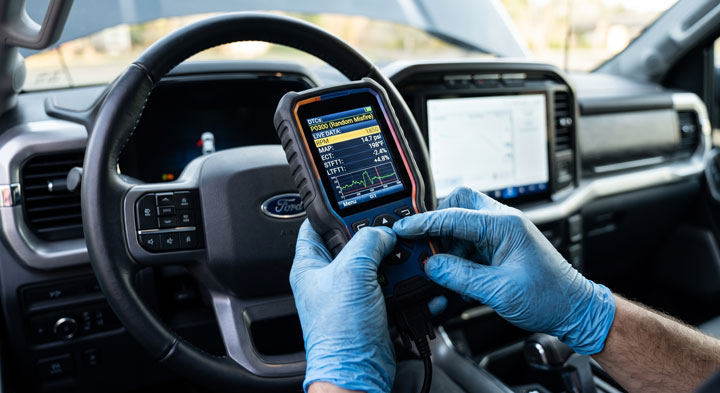
Connect your OBD2 scan tool directly into the diagnostic port located under the driver-side dashboard.
Scan both the Powertrain Control Module (PCM) and Transmission Control Module (TCM) for active, pending, or stored diagnostic trouble codes.
Look specifically for gear ratio error codes such as P0731 through P0736, solenoid performance codes like P0751, or pressure control codes like P2700.
Document every code found during this initial scan because DTCs point directly to the affected hydraulic circuit.
Step 2: Inspect Transmission Fluid Level and Thermal Condition.
Park your truck on a completely level surface and bring the transmission up to operating temperature between 180°F and 200°F.
Carefully locate the dipstick stub under the passenger side of the transmission case near the exhaust pipe.
Wear protective heat-resistant gloves while checking the fluid level because working near hot exhaust components presents burn hazards.
Verify that the fluid level sits squarely within the crosshatched operating range on the dipstick stub.
Inspect the fluid color and smell, taking note if the fluid appears dark brown, black, or smells heavily burnt.
Step 3: Reset PCM Adaptive Transmission Shift Tables.
Modern Ford automatics constantly adjust line pressures to match driver habits through an adaptive learning strategy.
Over time, corrupted adaptive memory tables can cause harsh downshifts, gear hunting, and delayed drive engagement.
Use your advanced scan tool or clear the PCM memory to reset the learned adaptive values back to factory defaults.
Perform the official Ford adaptive relearn drive cycle by accelerating smoothly through all gears and allowing coast-down stops.
Monitor how the transmission behaves during the relearn process to see if software resetting resolves the f150 transmission shift issues.
Step 4: Check Active Recall Campaigns and Technical Service Bulletins.
Compare your vehicle VIN against official Ford safety recall databases and NHTSA technical service bulletins.
Check if your 6-speed truck qualifies for safety recall 26V237 regarding Output Shaft Speed sensor signal loss.
Review TSB 24-2254 and TSB 25-2018 if your 10-speed truck exhibits severe ford f150 hard shifts between 3rd and 5th gears.
Verify whether authorized dealers offer complimentary software reflashes or extended component coverage before buying replacement parts.
Step 5: Inspect Solenoid Body and Main Control Valve Assembly.
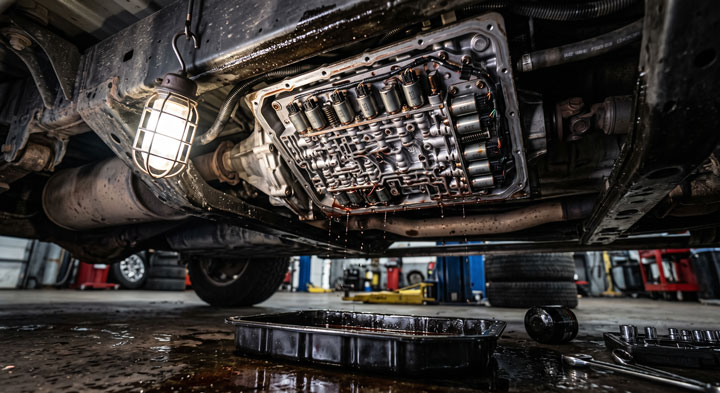
Drop the transmission oil pan to inspect the internal magnet for excessive metallic debris or large clutch material flakes.
Small gray sludge buildup on the magnet is normal wear, but brass filings or steel fragments signal internal component destruction.
Test the main control valve body separator plate for cross-leakage, sticking valves, or degraded rubber check balls.
Replace contaminated solenoids or install an upgraded valve body separator plate to restore correct internal line pressure.
Step 6: Perform Internal Hardware Verification and Pressure Testing.
Connect a hydraulic pressure transducer to the designated line pressure test port on the transmission case.
Measure hydraulic pressure readings during key gear commands to check for internal fluid bypass.
A significant pressure drop during specific gear shifts confirms internal seal failure or clutch drum sleeve displacement.
Schedule internal transmission disassembly to replace worn clutch packs, leaking bushings, or failed drum assemblies.
Executing these detailed diagnostic procedures keeps you from replacing expensive components unnecessarily.
If you need further guidance or want to explore more DIY truck care guides, check out our resource center at Bryan’s Garage.
The Mechanical Causes Behind 6R80 and 10R80 Transmission Failures
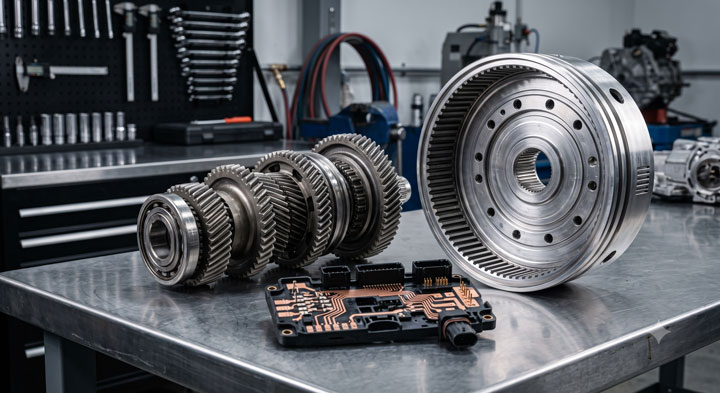
Understanding the exact physical mechanics inside your gearbox is essential for effective troubleshooting.
Based on diagnostic feedback from over 18,587+ car owners, most shifting problems stem from two distinct mechanical architectures: the 6-speed 6R80 and the 10-speed 10R80.
The 6R80 transmission was produced for model years 2009 through 2017 and earned a solid reputation for mechanical durability.
However, its primary point of failure centers on the internal molded lead frame mounted directly atop the valve body.
This plastic lead frame houses the Output Shaft Speed (OSS) sensor, Turbine Shaft Speed sensor, and transmission range sensor.
Over time, continuous heat cycles causing thermal expansion lead to micro-cracks inside the lead frame circuitry.
When electrical signal loss occurs at highway speeds, the PCM misinterprets vehicle speed as zero mph.
This erroneous data triggers a violent, unintended downshift into 1st or 2nd gear, causing rear tire lockup and immediate loss of vehicle control.
In contrast, the 10R80 10-speed transmission introduced in 2017 utilizes a complex clutch-to-clutch architecture.
The leading cause of severe shifting issues in the 10R80 is axial movement of the internal sleeve inside the CDF clutch drum.
The factory press-fit bushing inside the aluminum CDF drum cylinder can gradually slide out of its intended position due to intense thermal stresses.
As this sleeve migrates, it uncovers oil passages and destroys the Teflon sealing rings that maintain clutch pressure.
This hydraulic leak starves the C, D, and F clutch packs of fluid, causing severe gear slipping, flare shifts, and loud metallic clunks.
When the transmission slips f150 drivers will notice engine RPM soaring high without any forward vehicle acceleration.
Additionally, valve body cross-leaks and sticking variable-bleed solenoids aggravate these shifting complaints.
When hydraulic pressure drops below specification, the torque converter lockup clutch stutters, creating a noticeable shudder sensation similar to driving over rumble strips.
Addressing these specific component failures requires specialized parts redesigned by factory engineers to eliminate original manufacturing flaws.
Comparing F-150 Gear Systems: 4-Speed, 6-Speed, and 10-Speed Transmissions

Ford has continuously updated its light-duty truck gearboxes over the last two decades to meet demands for improved towing and fuel efficiency.
Comparing these generations helps owners recognize the unique operational characteristics and failure points of their truck.
| Transmission Model | Production Years | Primary Shift Defect | Diagnostic Complexity | Estimated Rebuild Cost |
|---|---|---|---|---|
| 4R75E (4-Speed) | 2004–2008 | Snap ring failure & band wear | Low (Hydraulic/Mechanical) | $2,200 – $3,200 |
| 6R80 (6-Speed) | 2009–2017 | Molded lead frame OSS sensor drop | Moderate (Electronic/Lead Frame) | $2,800 – $4,200 |
| 10R80 (10-Speed) | 2017–Present | CDF drum sleeve movement & valve cross-leaks | High (Adaptive/Multi-Clutch) | $4,500 – $7,500 |
The Legacy 4R75E 4-Speed Automatic
The older 4R75E transmission relies on traditional mechanical bands, planetary gearsets, and basic pressure solenoids.
It provides dependable service under mild driving conditions but lacks the close gear ratios needed for optimal engine performance while towing heavy loads.
Shift issues on the 4R75E usually stem from worn overdrive bands, broken servo snap rings, or degraded Mercon V fluid.
Diagnosing these older 4-speed units is relatively straightforward because mechanical wear is easy to observe upon pan removal.
The Generation-Two 6R80 6-Speed Automatic
Based on a licensed ZF transmission design, the 6R80 provided smooth performance and robust torque capacity across its production run.
Its gear spacing keeps EcoBoost and V8 engines within their ideal power bands during heavy towing.
While the internal mechanical gearsets are tough, the internal electronic lead frame remains its major failure point.
Replacing the molded lead frame and refreshing the fluid usually restores perfect operation without requiring a full overhaul.
The Modern 10R80 10-Speed Automatic
Jointly developed with General Motors, the 10R80 features ten tightly spaced forward ratios and three overdrive gears.
It utilizes real-time computer algorithms to skip non-essential gears under light throttle, such as shifting directly from 1st to 3rd or 3rd to 5th gear.
This rapid gear selection improves fuel economy, but it demands precise hydraulic line pressure to operate smoothly.
Because tolerances inside the 10R80 are extremely tight, tiny pressure fluctuations produce noticeable hard shifts and gear hunting.
Upgrading to the redesigned factory CDF drum featuring an integrated retaining lip prevents sleeve migration permanently.